Zuhaus – A House Within a House

20240411_c_Sofie_Latour065.jpg

The Beginning

On the EHAM premises in Hausham, a workshop and working environment has evolved over several decades. What was once planned as parking and garage space now accommodates the Zuhaus — or ZUH — as a structural continuation of this site. It complements the existing ensemble with precision and clarity, both functionally and architecturally.

As the site has grown, so too have working methods, spatial requirements, and forms of collaboration. ZUH responds with an independent architectural expression for contemporary work in a rural context. Existing structures are not simply continued but reinterpreted — through reduction, clarity, and a conscious approach to material, space, and detail.

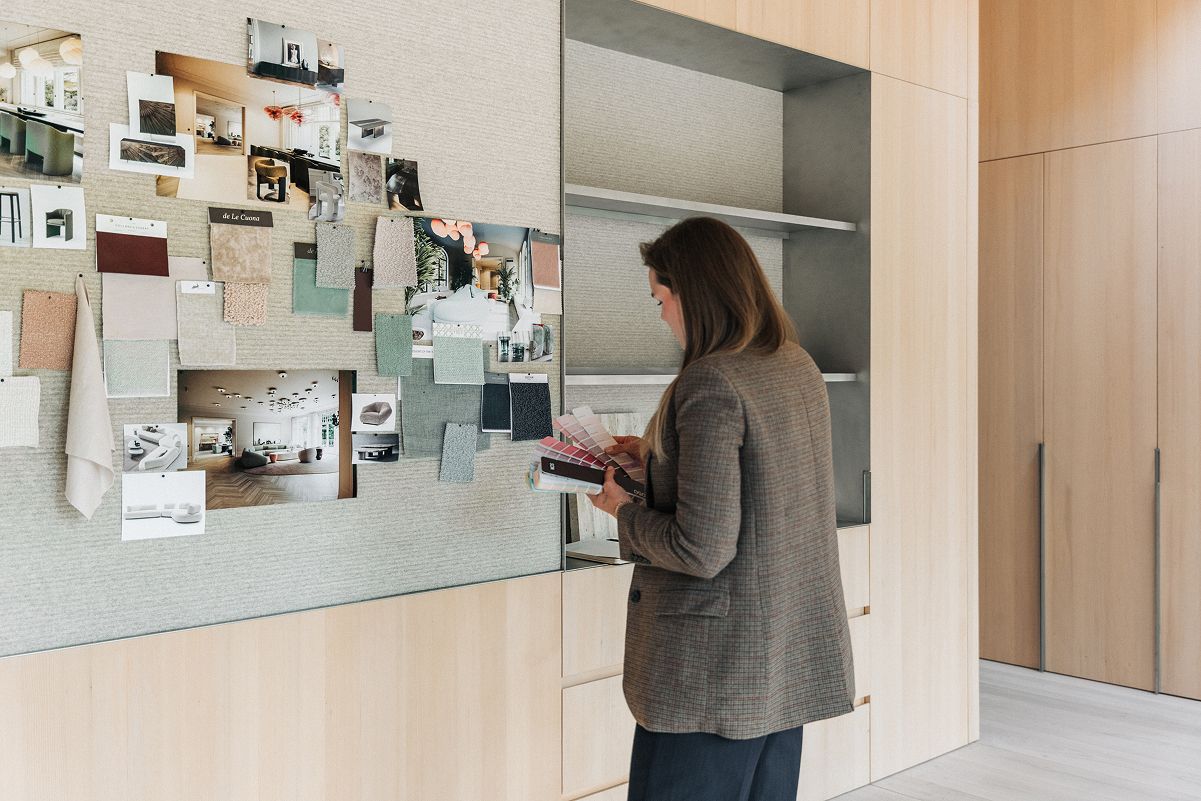
The aim was to develop a spatial prototype for planning and focused work, prepared for future climatic and operational developments. The project was realized in close collaboration with Marie Eham and the Vienna-based architectural studio Ehrmann & Gruber, together with Dominik and Josef Eham and EHAM’s interior architecture department.

Groß (L1580290)
Groß (L1580313)
Groß (L1580294)
Groß (L1580215)

Material & Detailkonzept

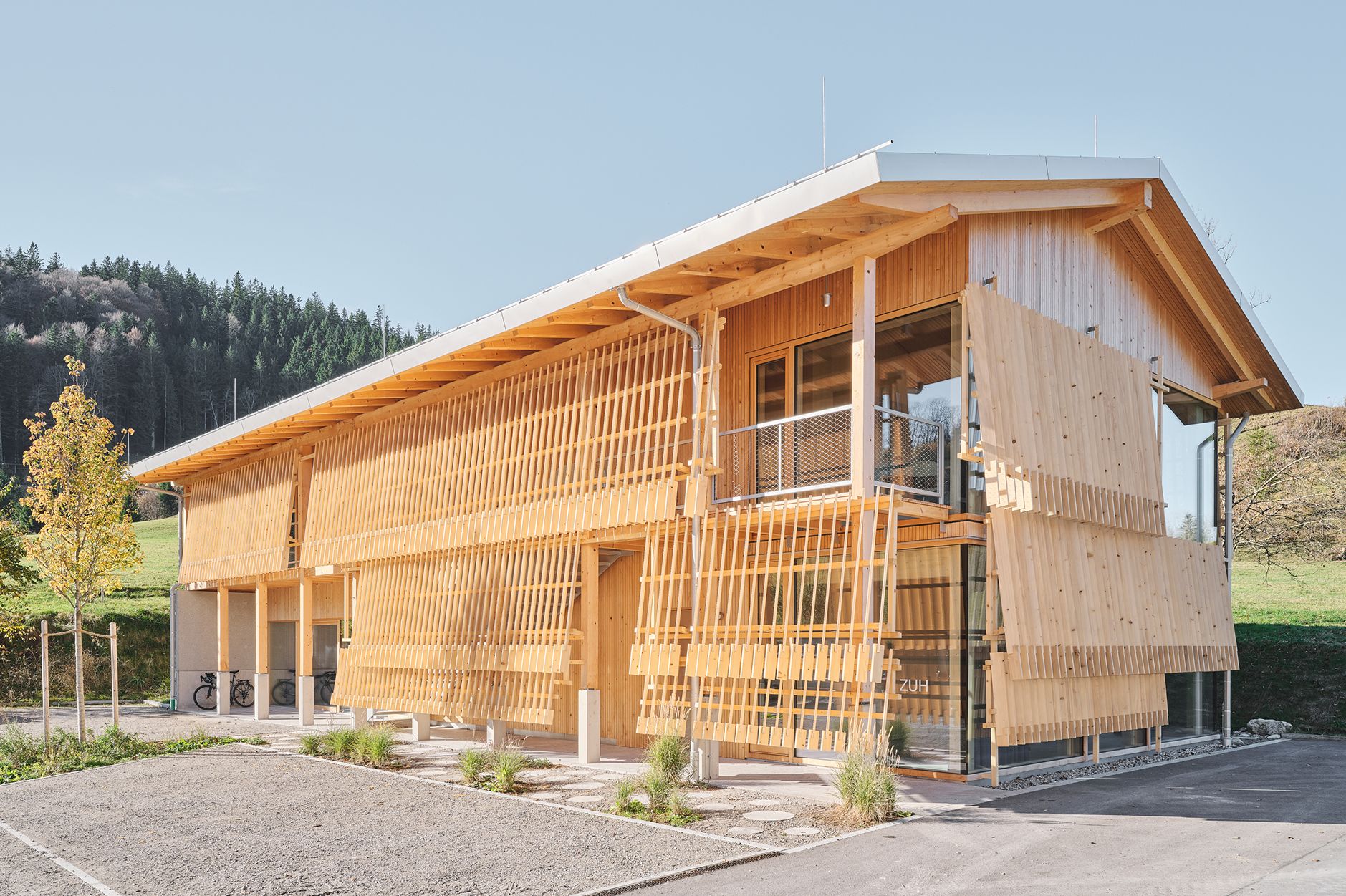
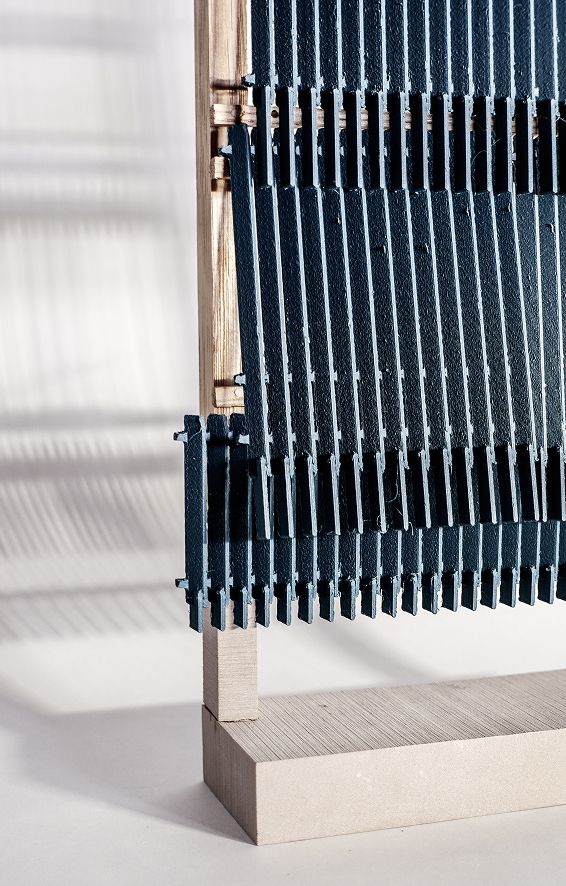
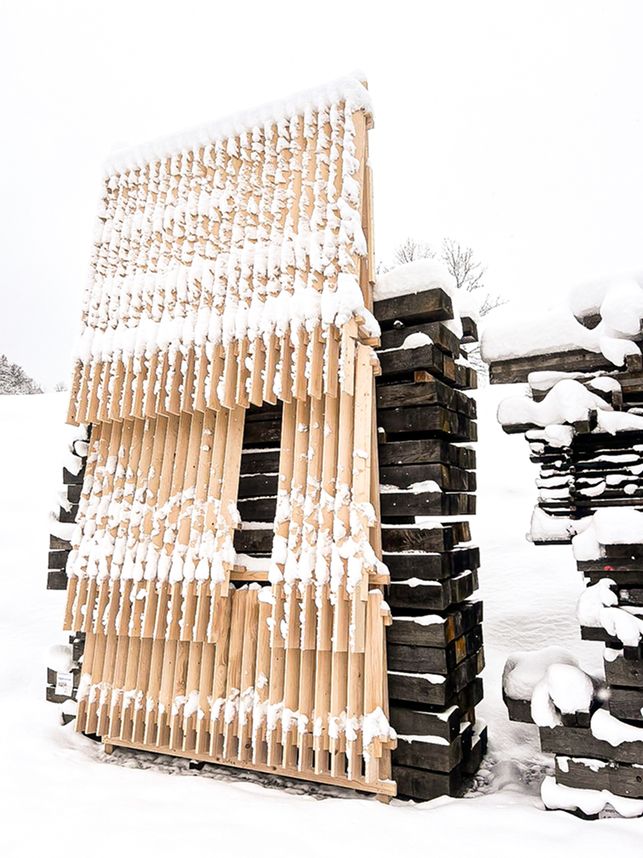
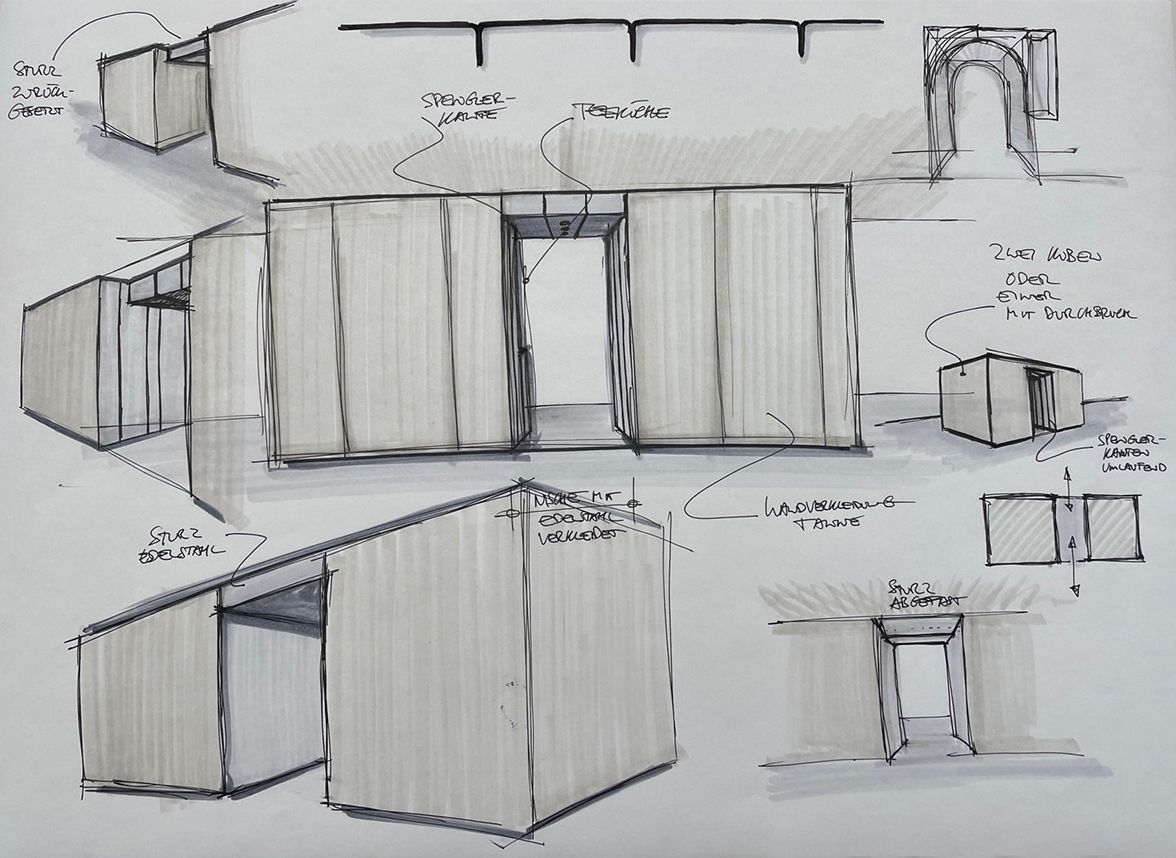
The design of ZUH is derived directly from the material itself. Its starting point was the wood stack — an everyday sight on the EHAM site. Layered boards that function through spacing, orientation, and air circulation. This principle was structurally translated into the building.

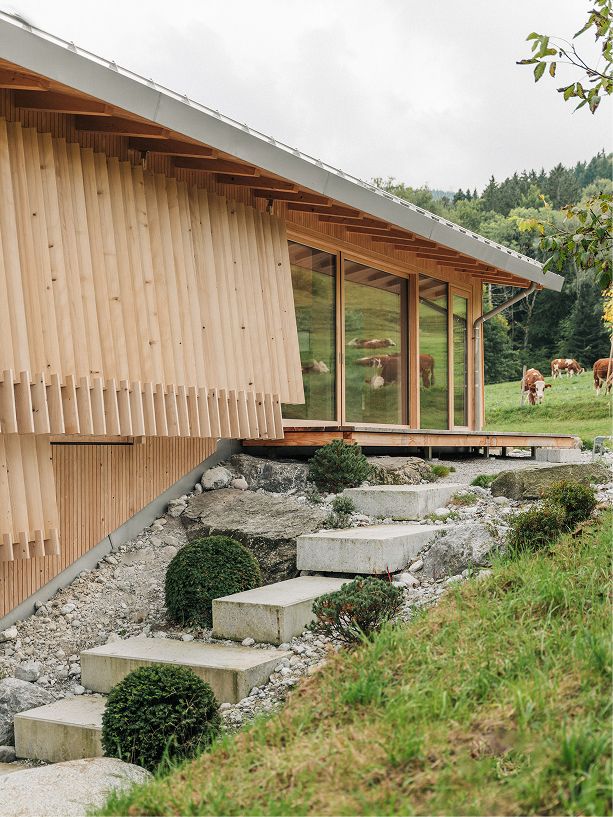
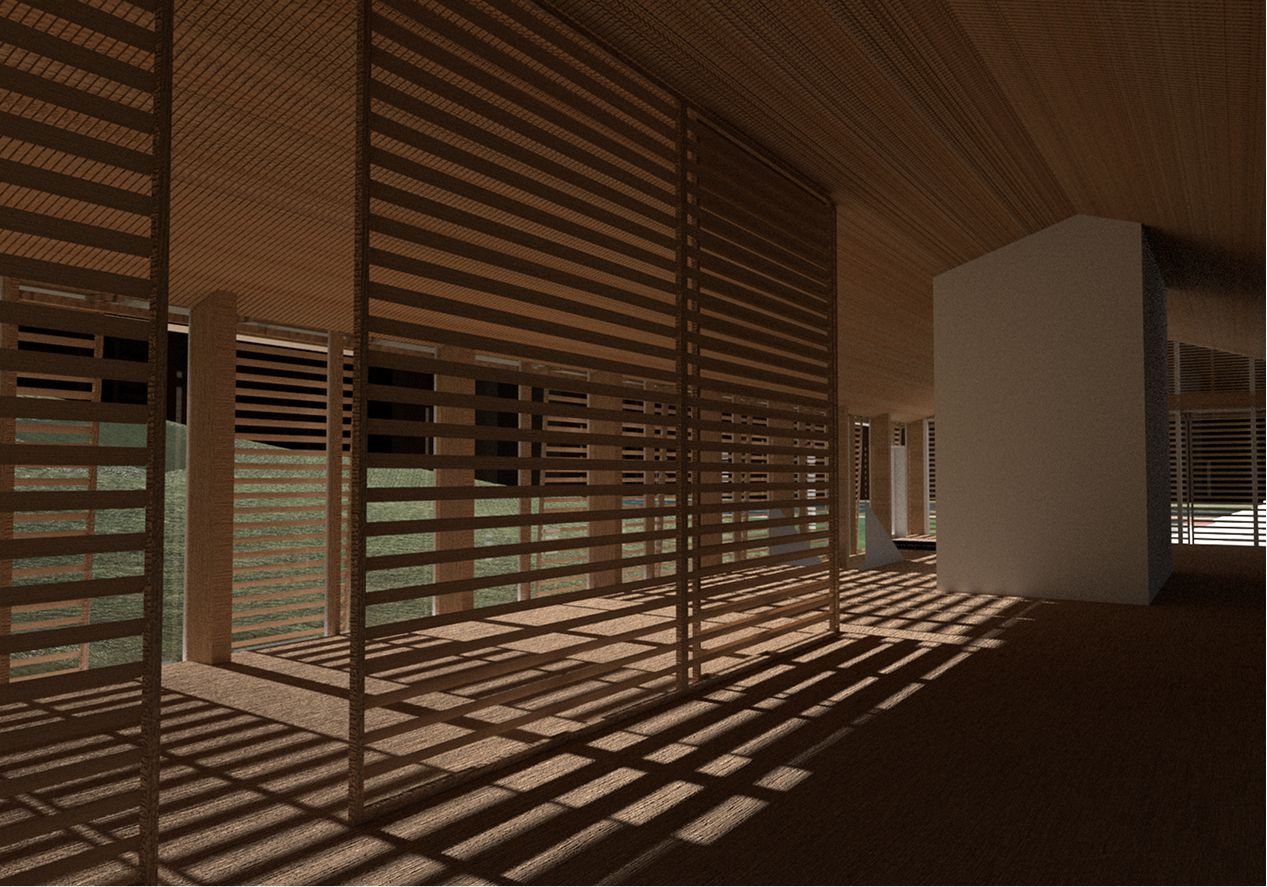
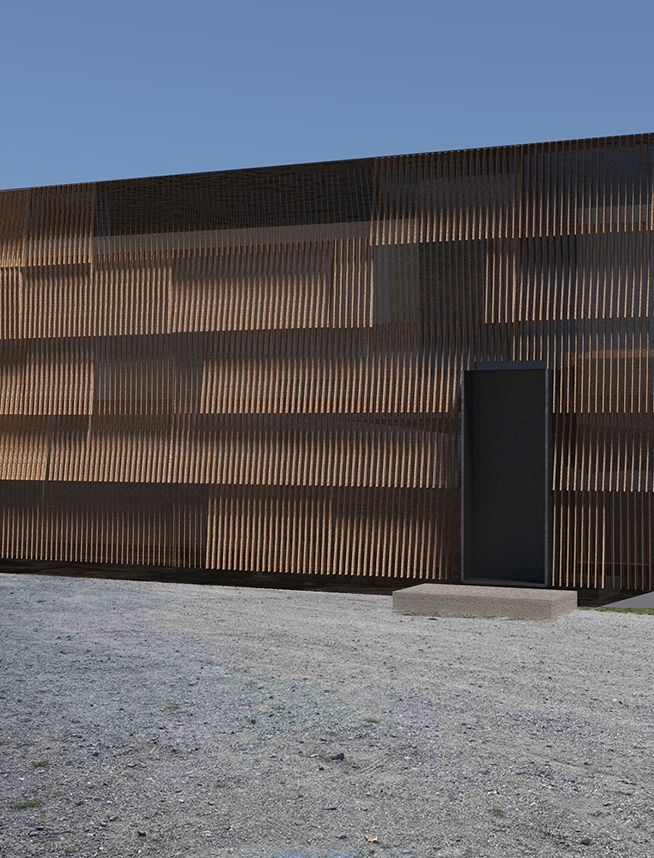
The façade is conceived as a multilayered system of untreated fir. Horizontally stacked slats simultaneously provide shading, weather protection, and a filtering effect. The resulting voids regulate light and climate while creating a gradual transition between exterior and interior.

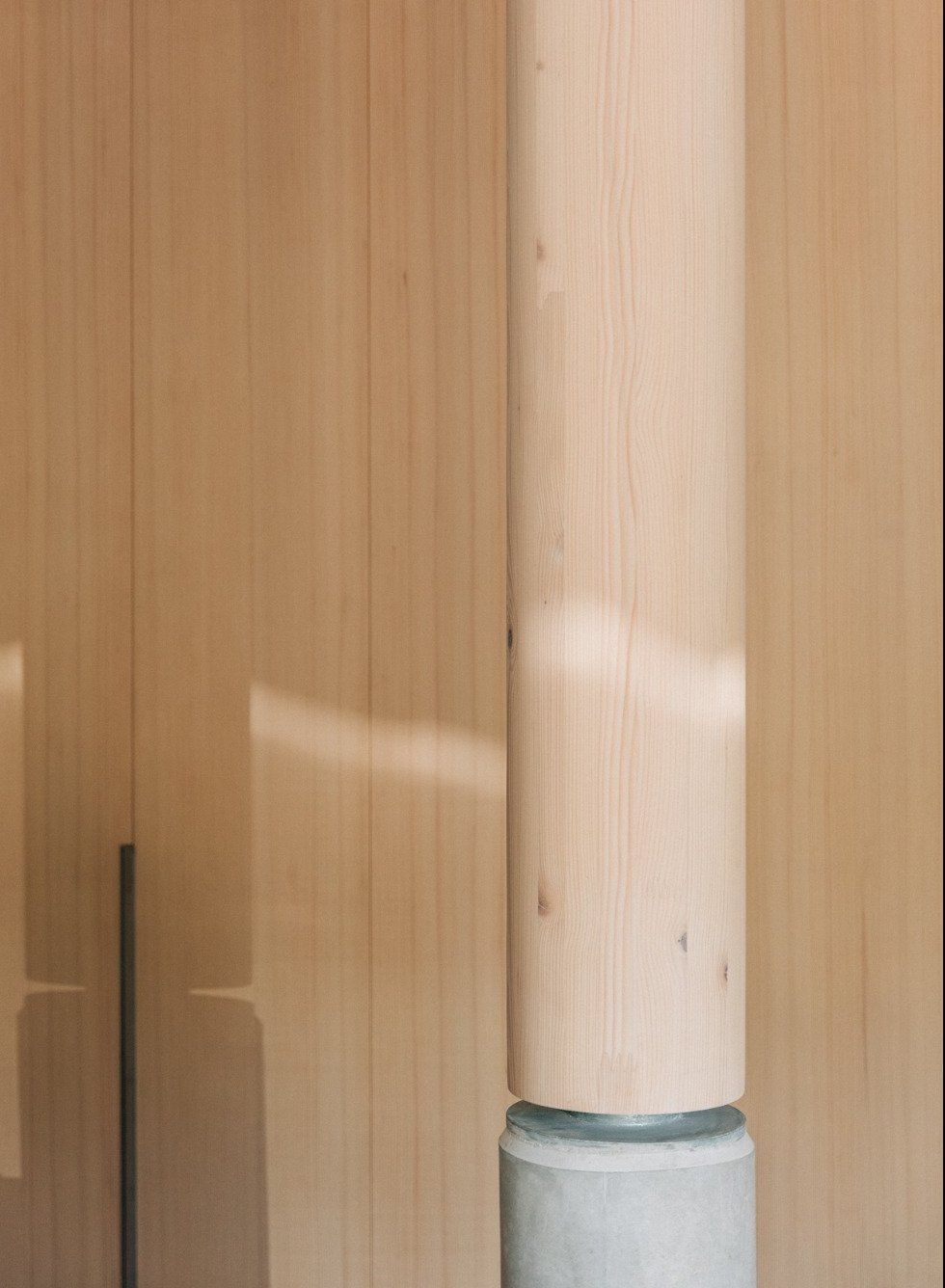
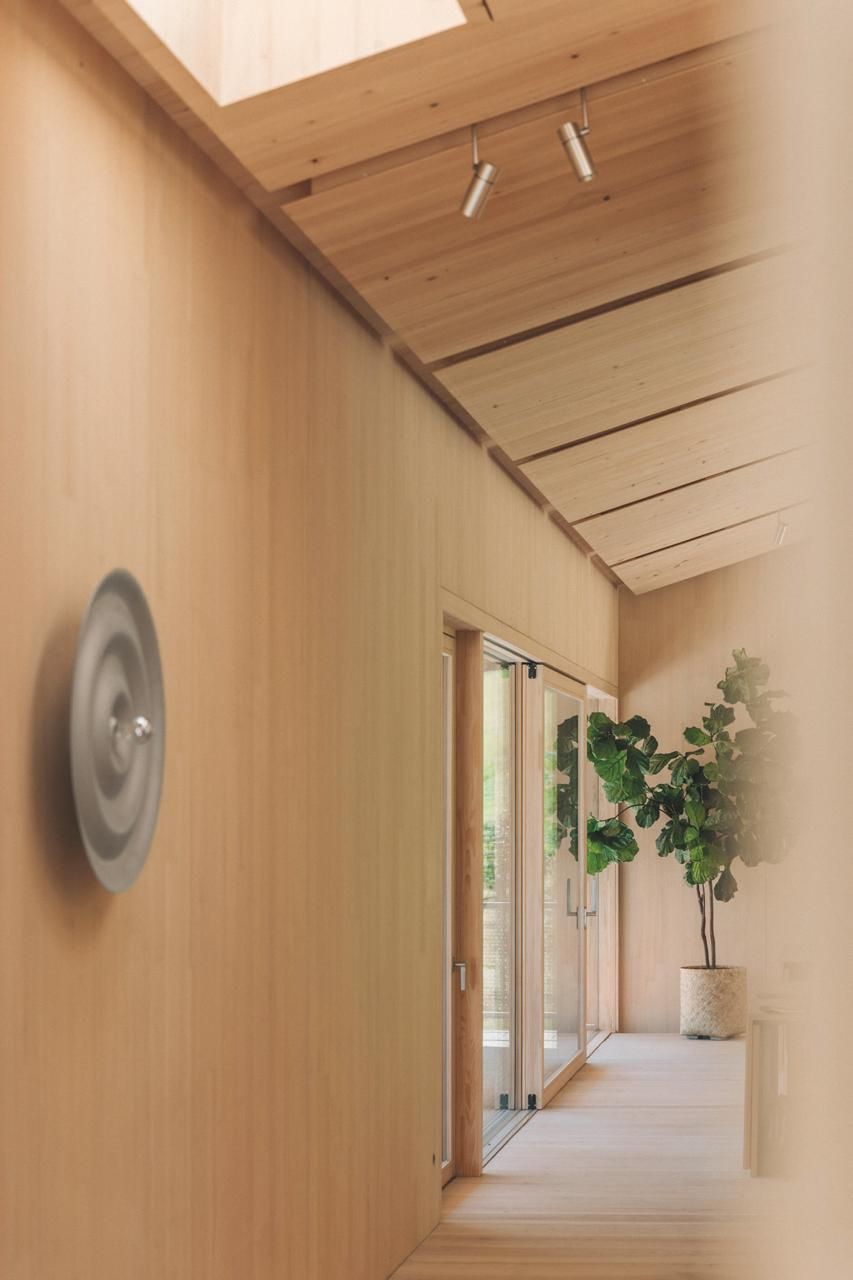
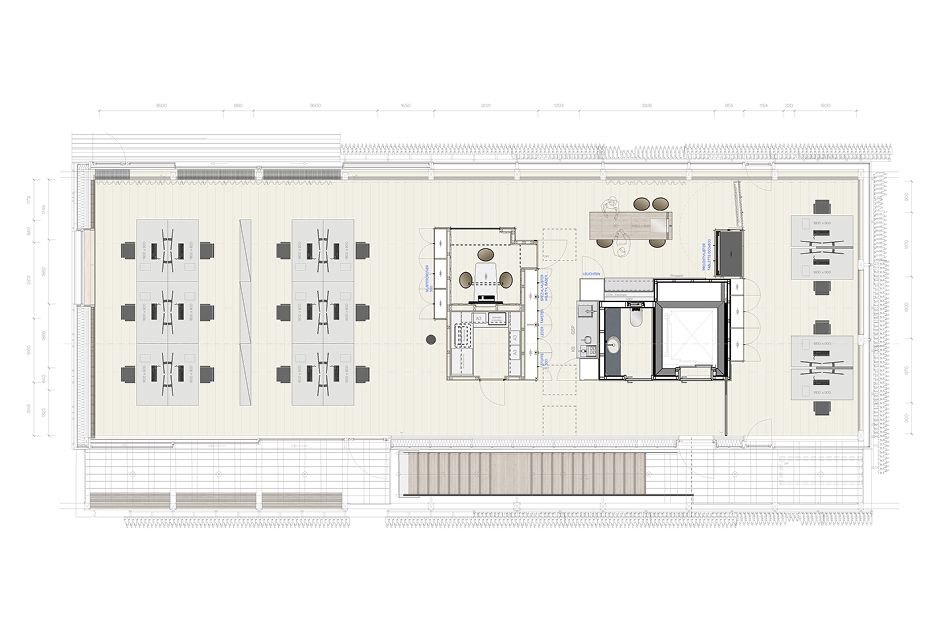
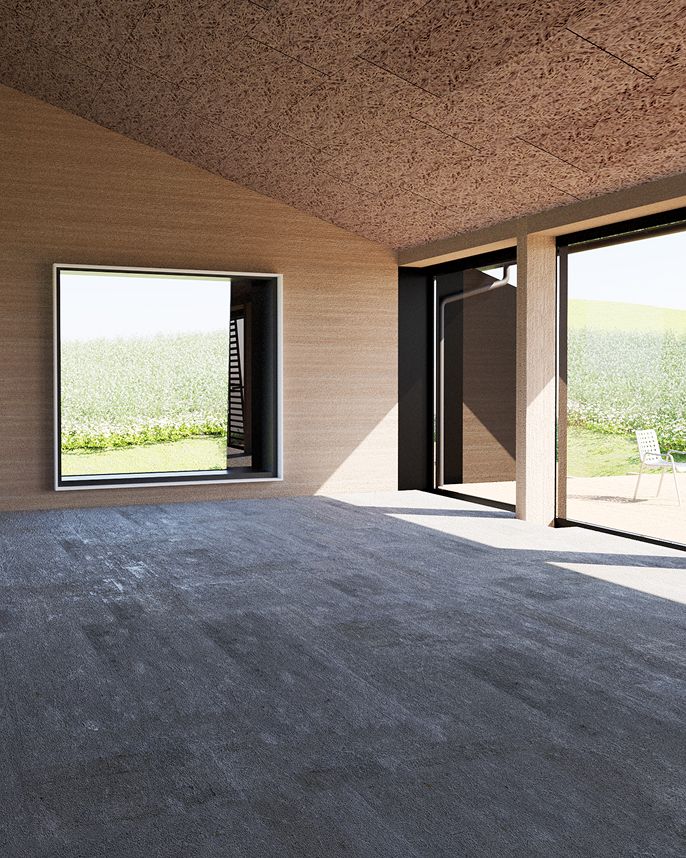
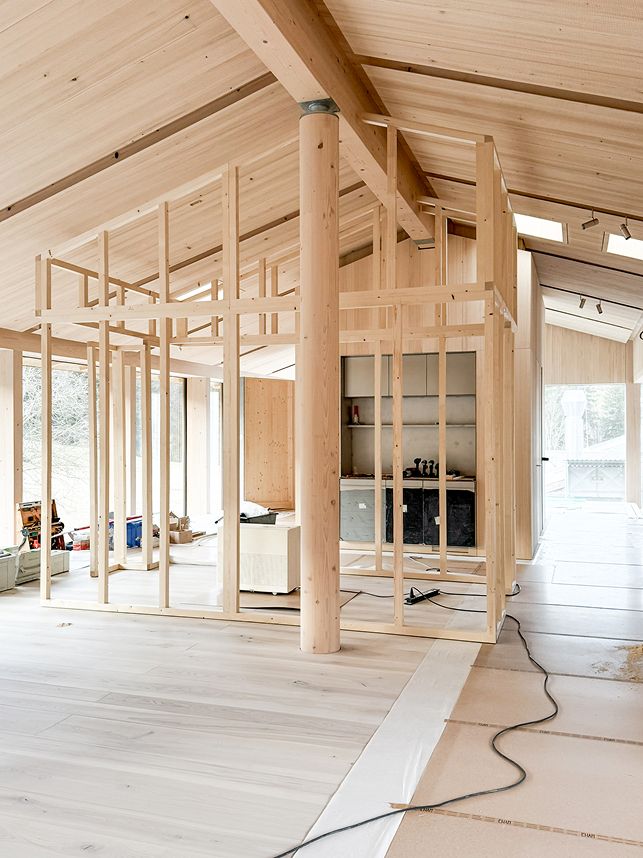
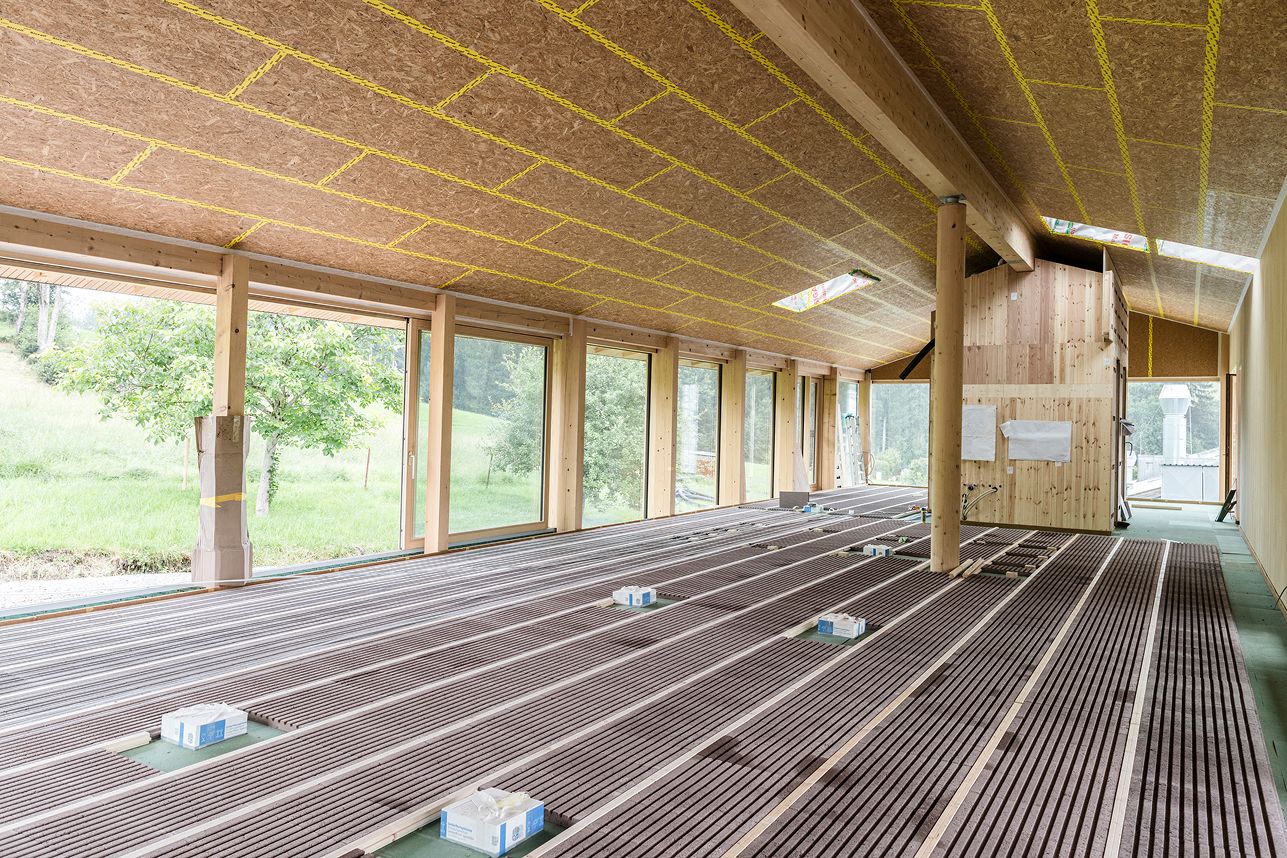
The load-bearing structure is executed as a timber frame construction on a 2.5-meter grid. Column-free areas allow for flexible use. Walls and ceilings on the upper floor are made of untreated spruce and fir, while the floor is crafted from sanded ash. On the ground floor, a polished utility screed has been applied; areas in contact with the ground, as well as the elevator core, are realized in exposed concrete.

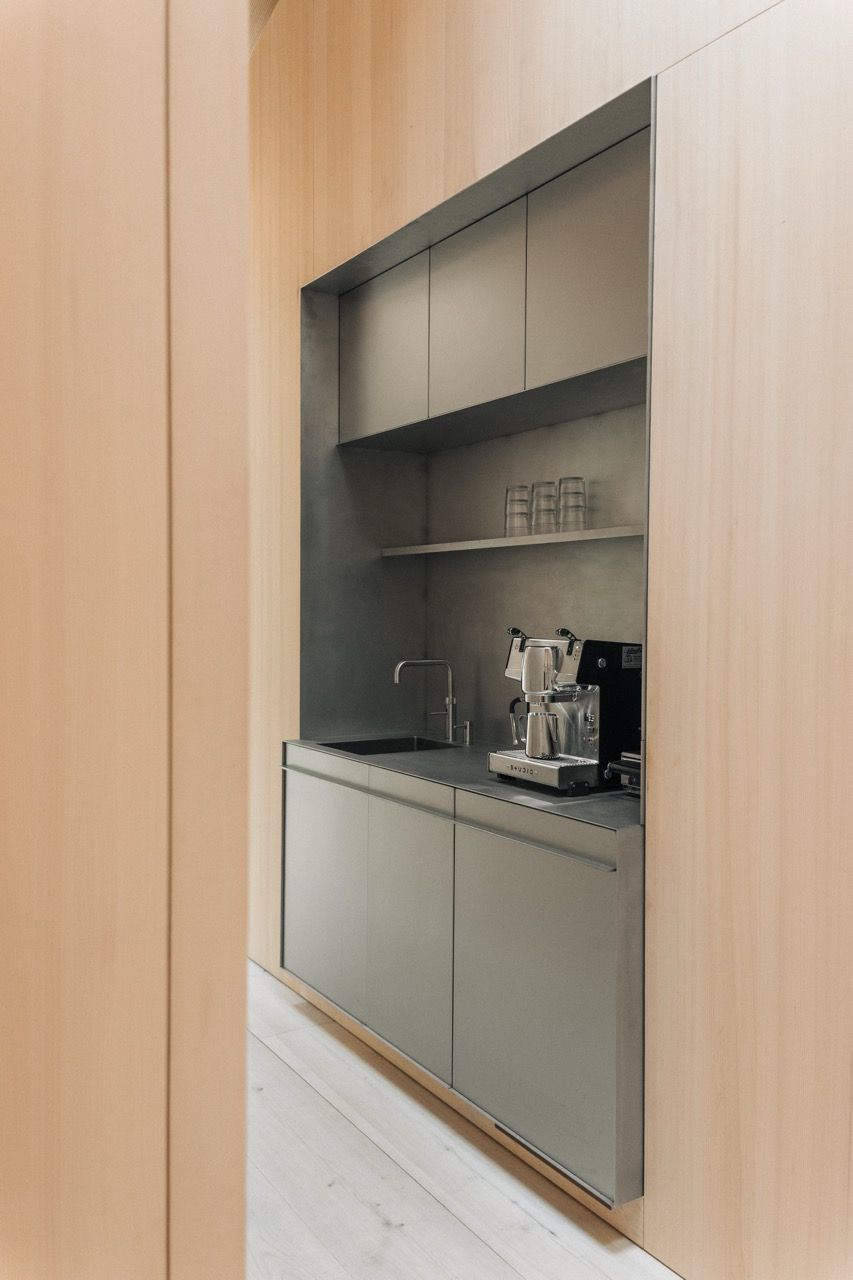
A central element on the upper floor is the perforated fir ceiling. The suspended, perforated wooden panels significantly improve room acoustics and are precisely integrated into the structural framework. Building services, ventilation, and technical systems are bundled within a central service core — visually reduced and functionally clear.

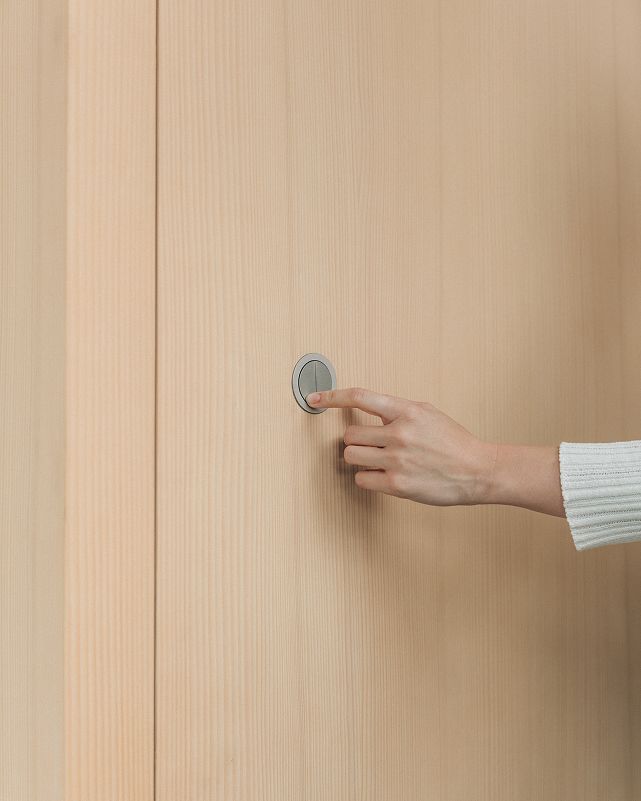
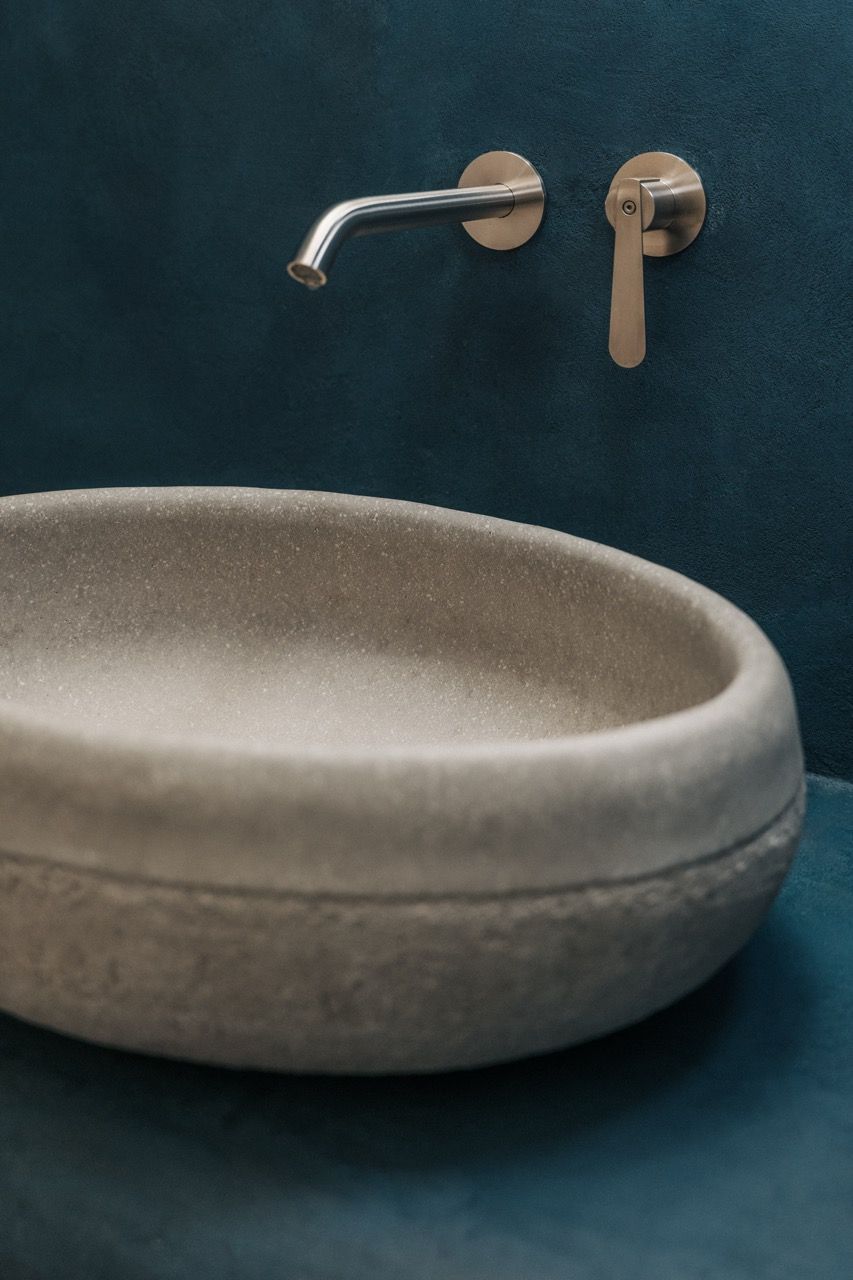
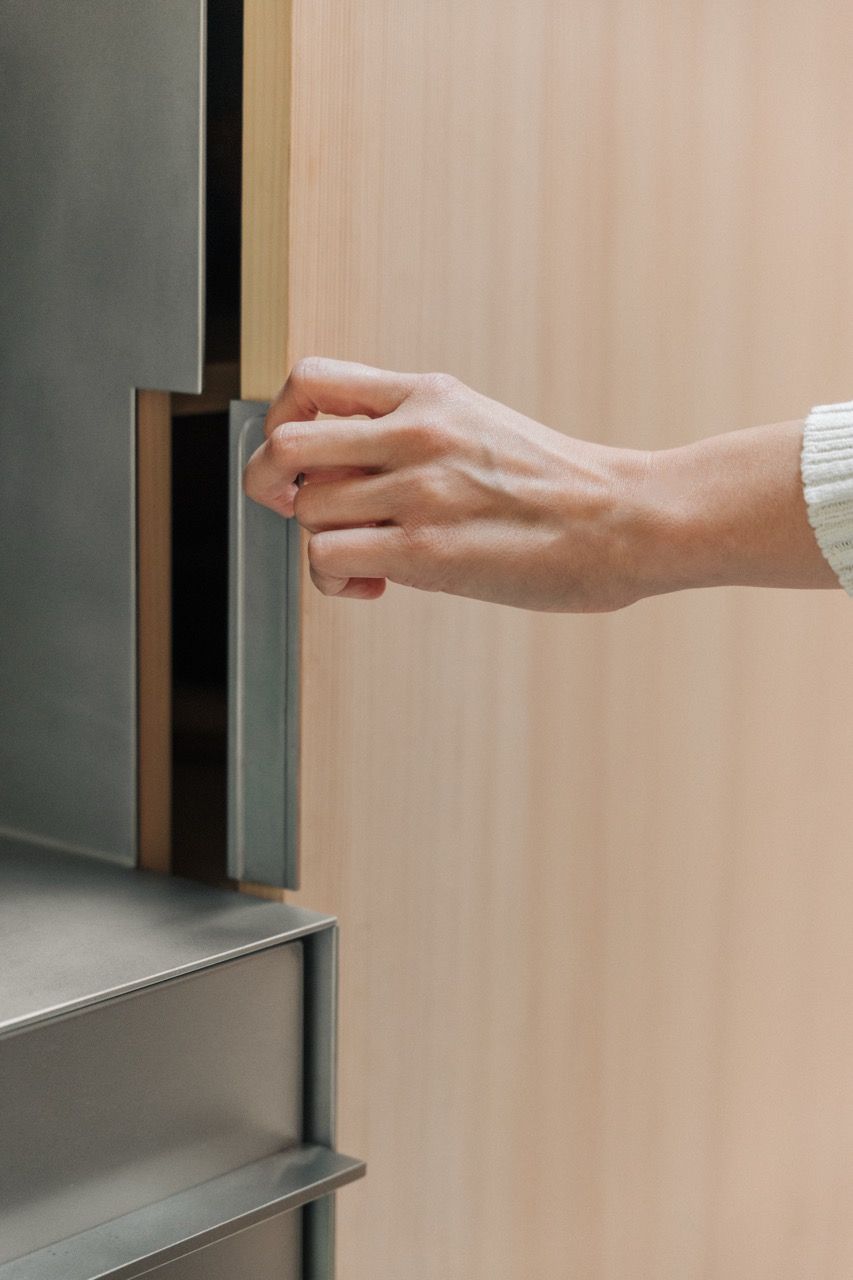
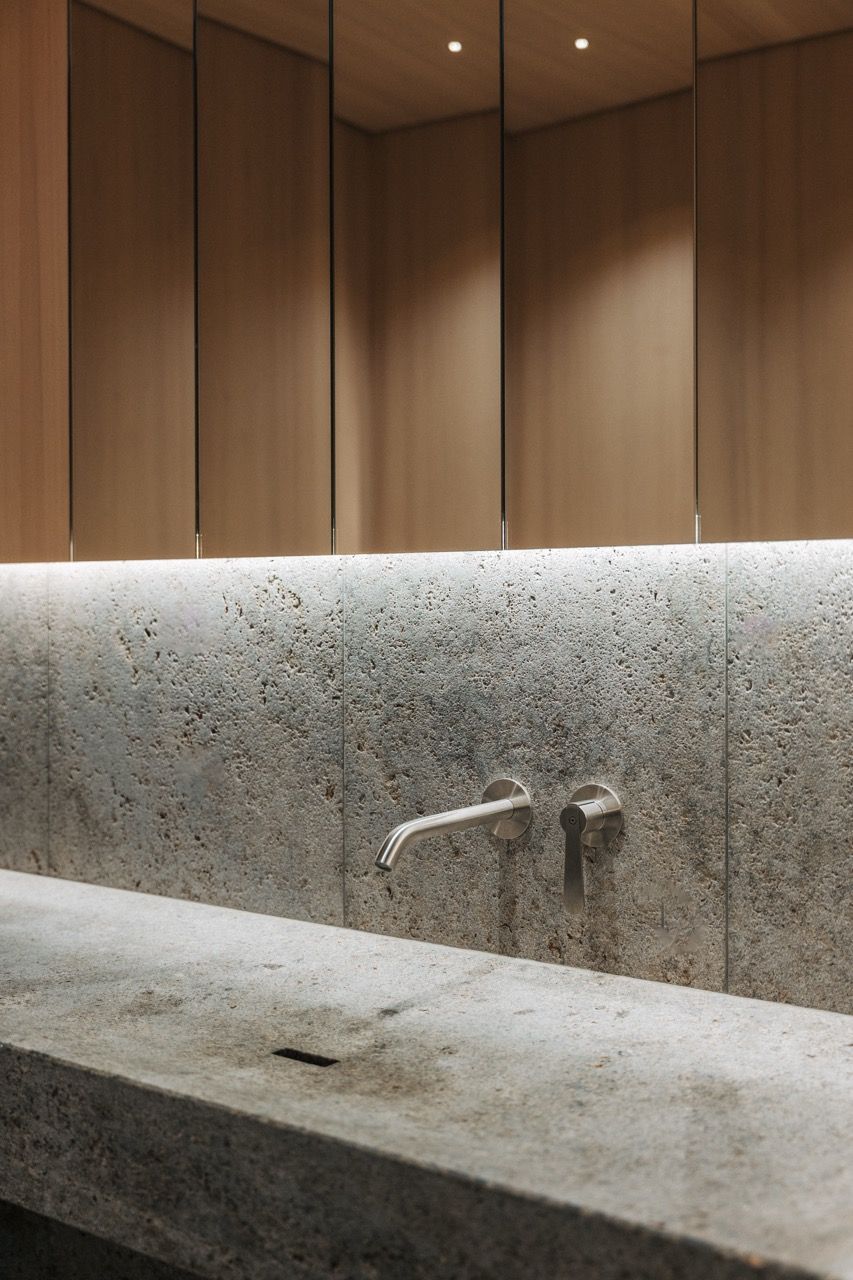
Details are deliberately restrained. Stainless steel switches are flush-mounted into the wooden surfaces, radii are softly shaped, and transitions between wall, window frame, and ceiling are precisely defined. Window frames in fir remain visible, as does the wood-fiber insulation in its constructive logic. Design here emerges not through addition, but through omission.

The building follows a sustainable approach throughout its entire life cycle. Cellulose and wood-fiber insulation, foam glass panels in ground-contact areas, a large-scale photovoltaic system, and the principle of disassembly enable long-term adaptability and reuse. The result is a workspace that makes its construction visible, allows materials to age naturally, and embodies flexibility not as a claim, but as a built reality.

028BESTOFARCHITEC24_PJK5217d 3
20240411_c_Sofie_Latour065.jpg-1
20240228_ZUH-1 7
20210804 Kopie 3
View_9 33
3_6 1
20250314_ZUH-1-2 3
6_ 20240722_(c)_Sofie_Latour200 3

Use Concept

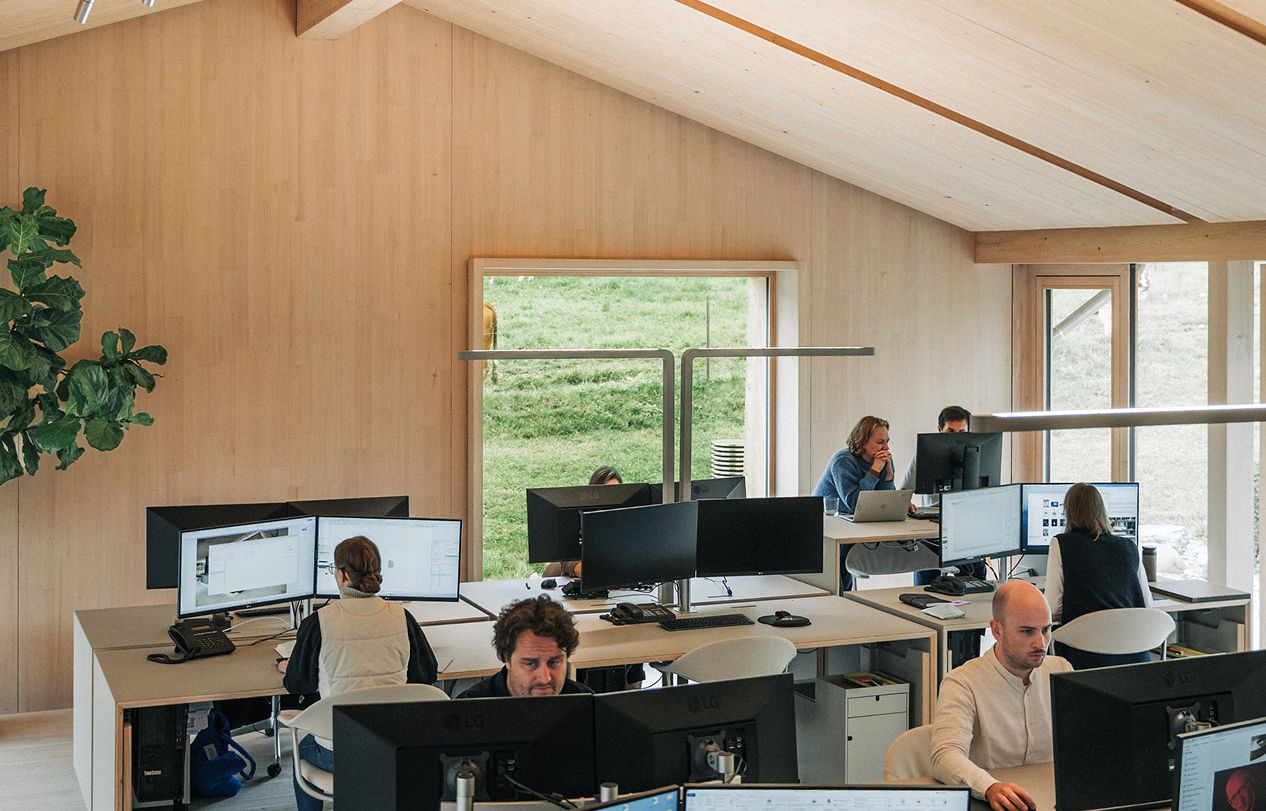
The building is organized as a layered spatial composition. Two levels form independently usable work areas: above, a quiet office platform; below, a studio and multifunctional space that can also serve as a regional meeting place. This clear separation allows for different modes of work — focused, open, or collaborative.

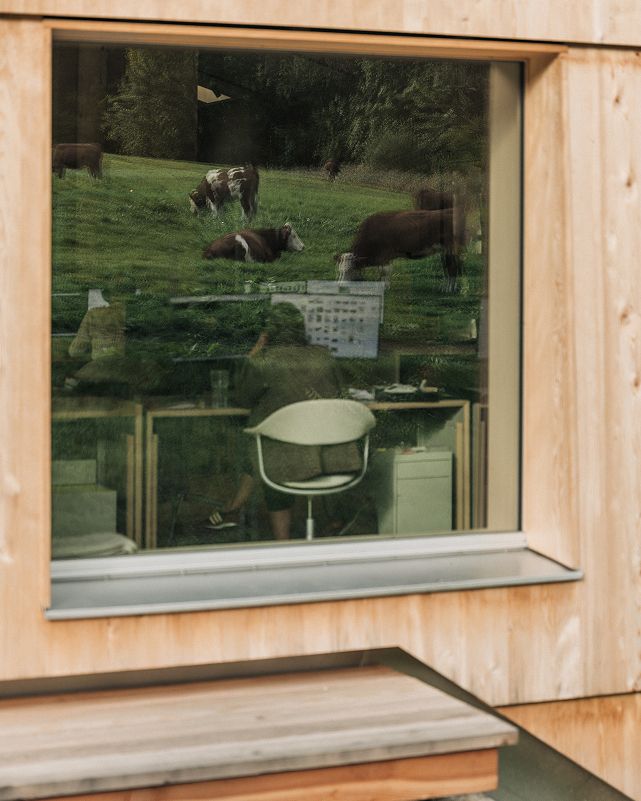
Through its deliberate integration into the slope, a spatial symbiosis of work and retreat emerges. All workstations offer direct views of the surrounding greenery without visual overload. A terrace integrates naturally into the topography — only a few steps are needed to step outside, with wide views across meadows and grazing cattle.

Access is provided via an external covered steel staircase, complemented by a barrier-free elevator within the core and a landscape-guided path along the hillside. Openings are precisely positioned to frame views while maintaining a sense of intimacy. Wooden slats serve as a constructive sun-shading system, responding differently to varying angles of sunlight.

Workstations are arranged with generous spacing and positioned perpendicular to the façade to minimize glare, reflections, and acoustic disturbance.
Collaboration

The project was realized in collaboration with the architectural duo atelier ehrmann:gruber (Christina Ehrmann and Christopher Gruber) and Marie Eham.

The design evolved through a continuous dialogue between architecture, planning, and craftsmanship. Decisions were reviewed, refined, and collectively developed throughout the process — in close coordination with Dominik and Josef Eham and EHAM’s interior architecture department.

A deep understanding of materials, constructive clarity, and meticulous craftsmanship formed the foundation of this collaboration. Not formal perfection, but spatial coherence was the guiding principle. Craftsmanship remains visible, materials are allowed to age, and structures are conceived to adapt to future requirements.

Background
View_9 27
L1580249 7
View_9 30
View_9 32

Completion

Zuhaus is not conceived as a finished object, but as a building designed for long-term use and adaptability. Components can be dismantled, materials reused, and structures are conceived with flexibility in mind. Sustainability is considered across the entire life cycle — from planning and operation to potential repurposing or disassembly.

Completion: January 2026
Interior Architecture: EHAM GmbH & Marie Eham
Architectural Design / Concept: atelier ehrmann:gruber (Christina Ehrmann, Christopher Gruber) & Marie Eham
Photography: 8am.aesthetics + David Schreyer