Living in Gstaad. Contemporary Interior Design in an Alpine Context
Initial SituationInitial Situation
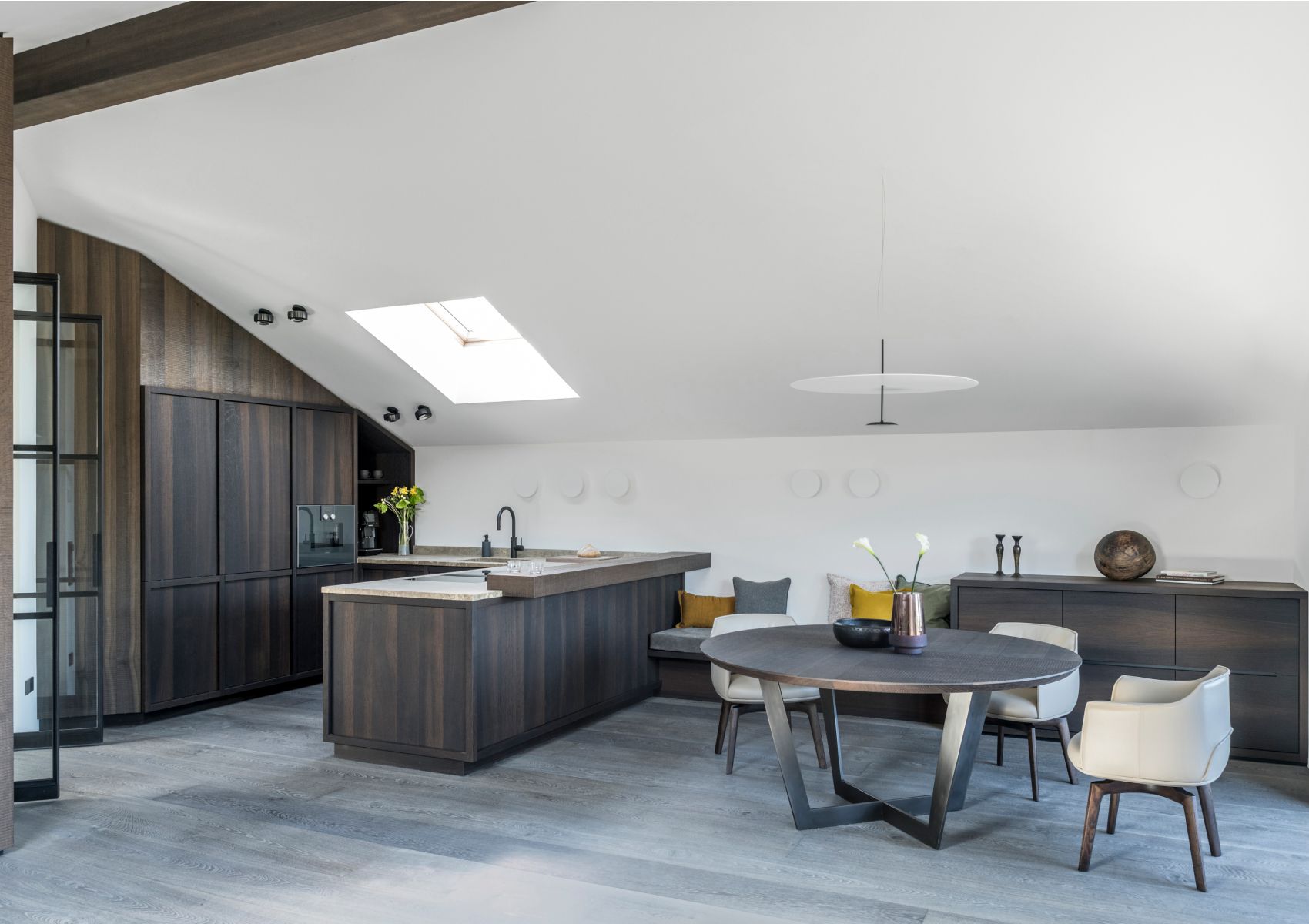
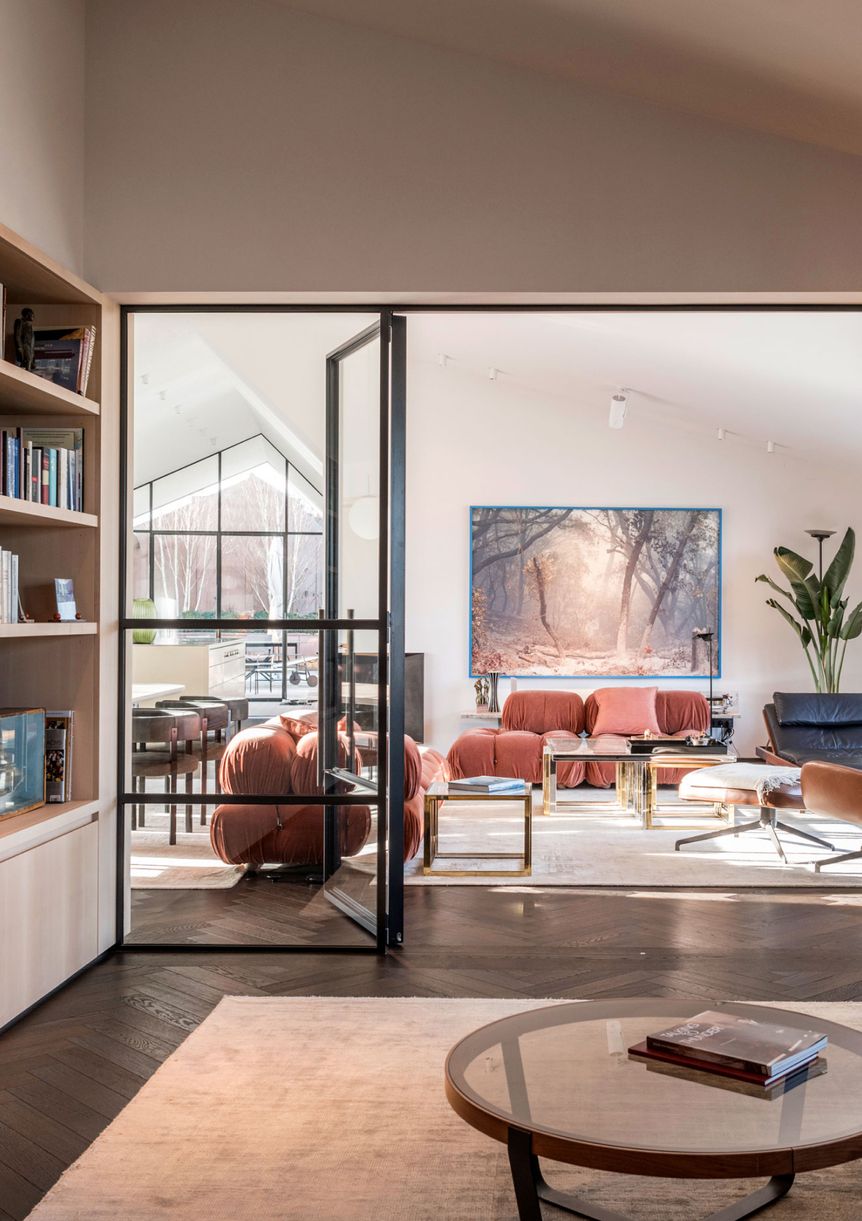
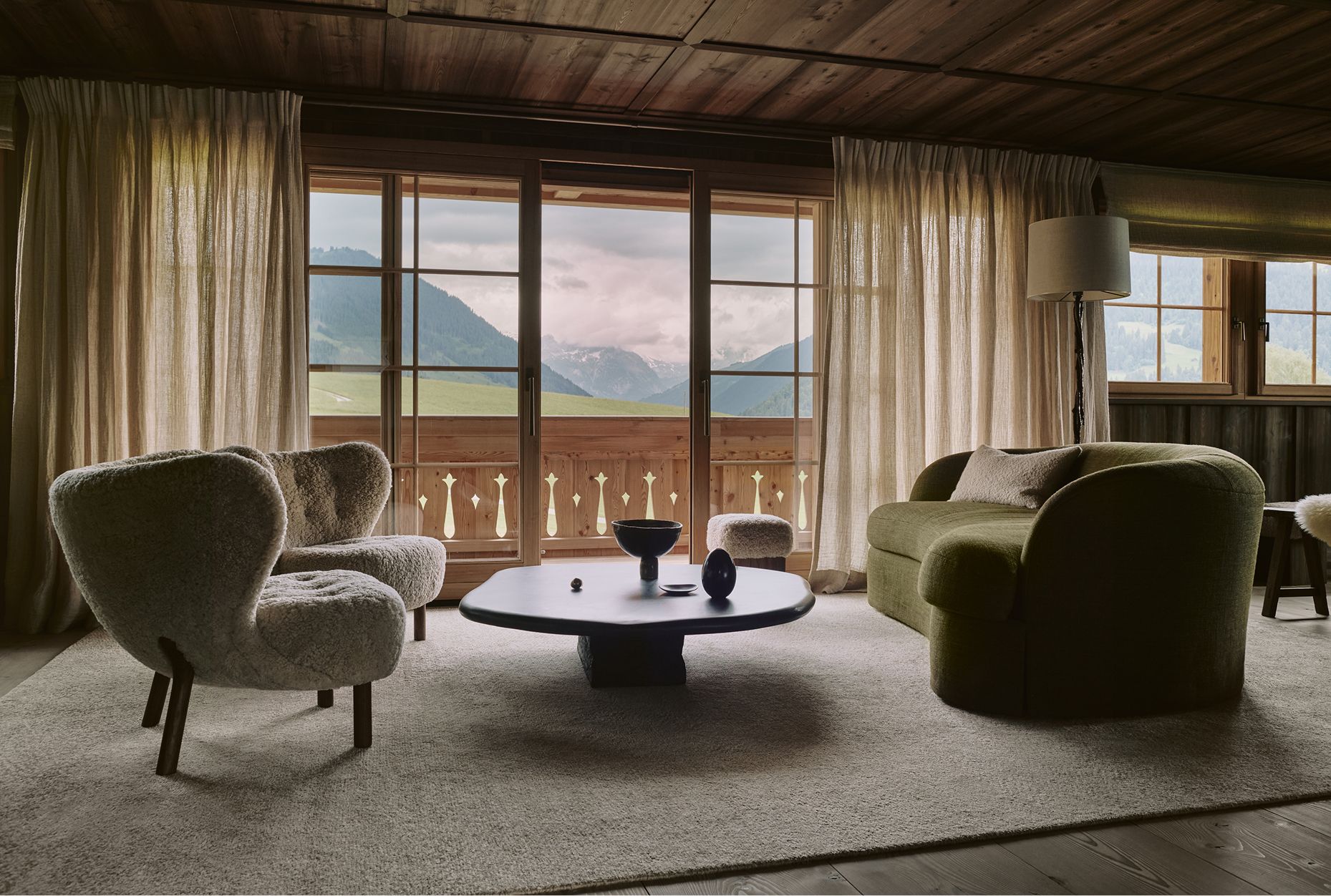
On a property in Gstaad, an ensemble of new architecture, landscape, and distinctive design was created based on the concept and design philosophy of designer Antje Hruby. The chalet was newly built in a regionally typical style – respectful of its surroundings and conceived as an elegant retreat without excess. Spanning three floors, the design organizes the residence into several bedrooms, an open-plan living and dining area, a kitchen, a library with fireplace, and a dedicated wellness area.
Design Objective
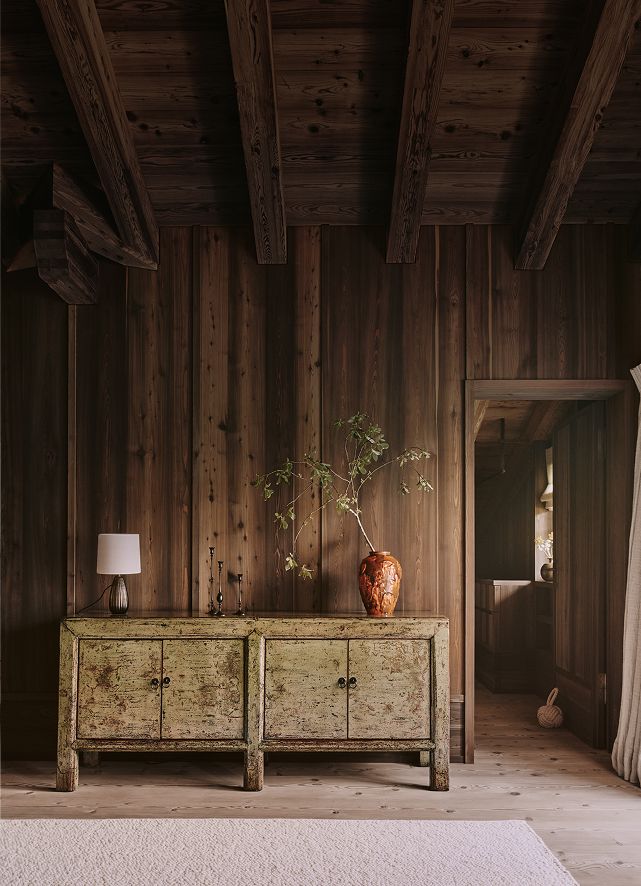
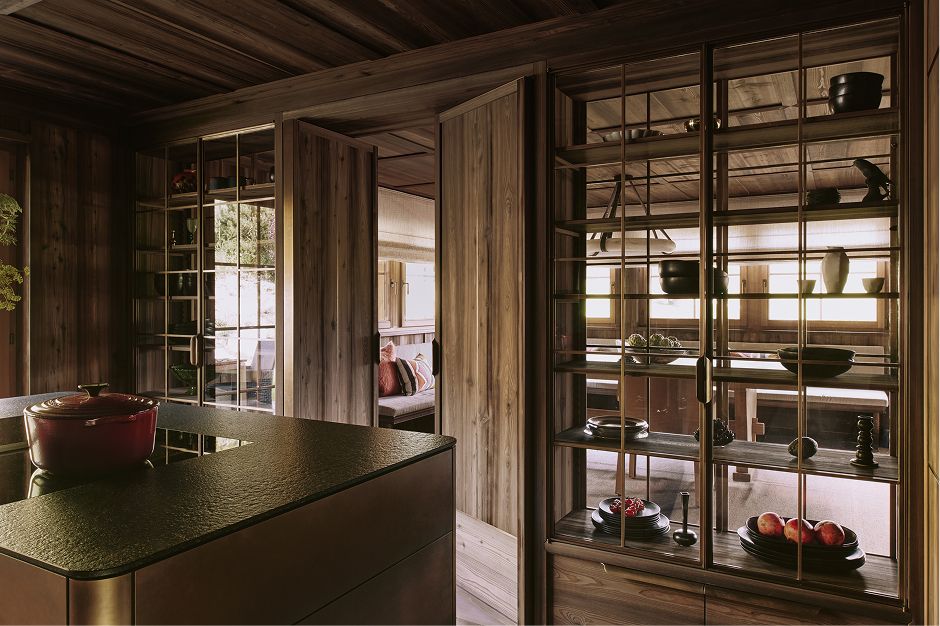
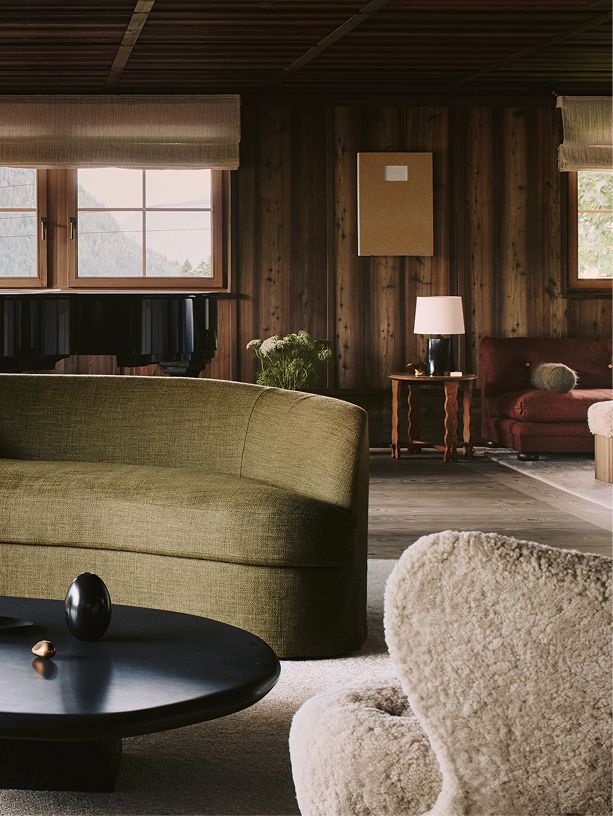
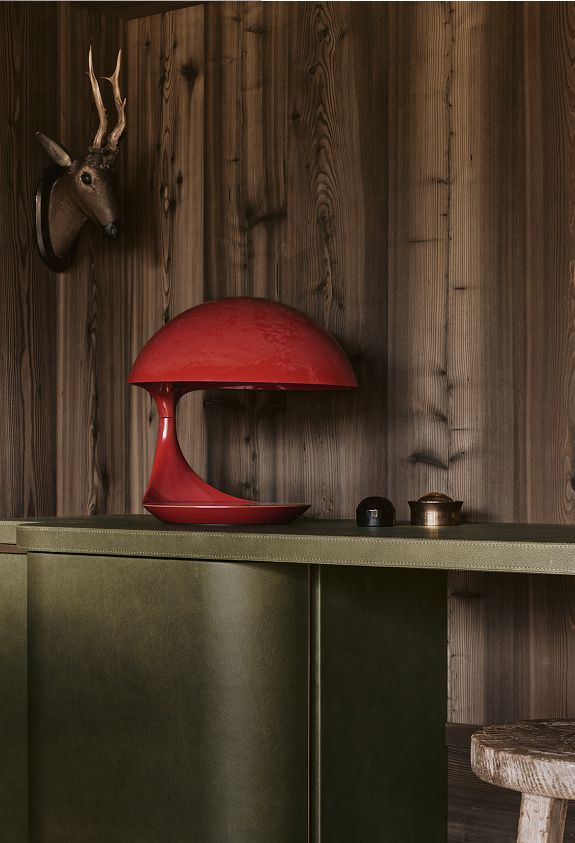
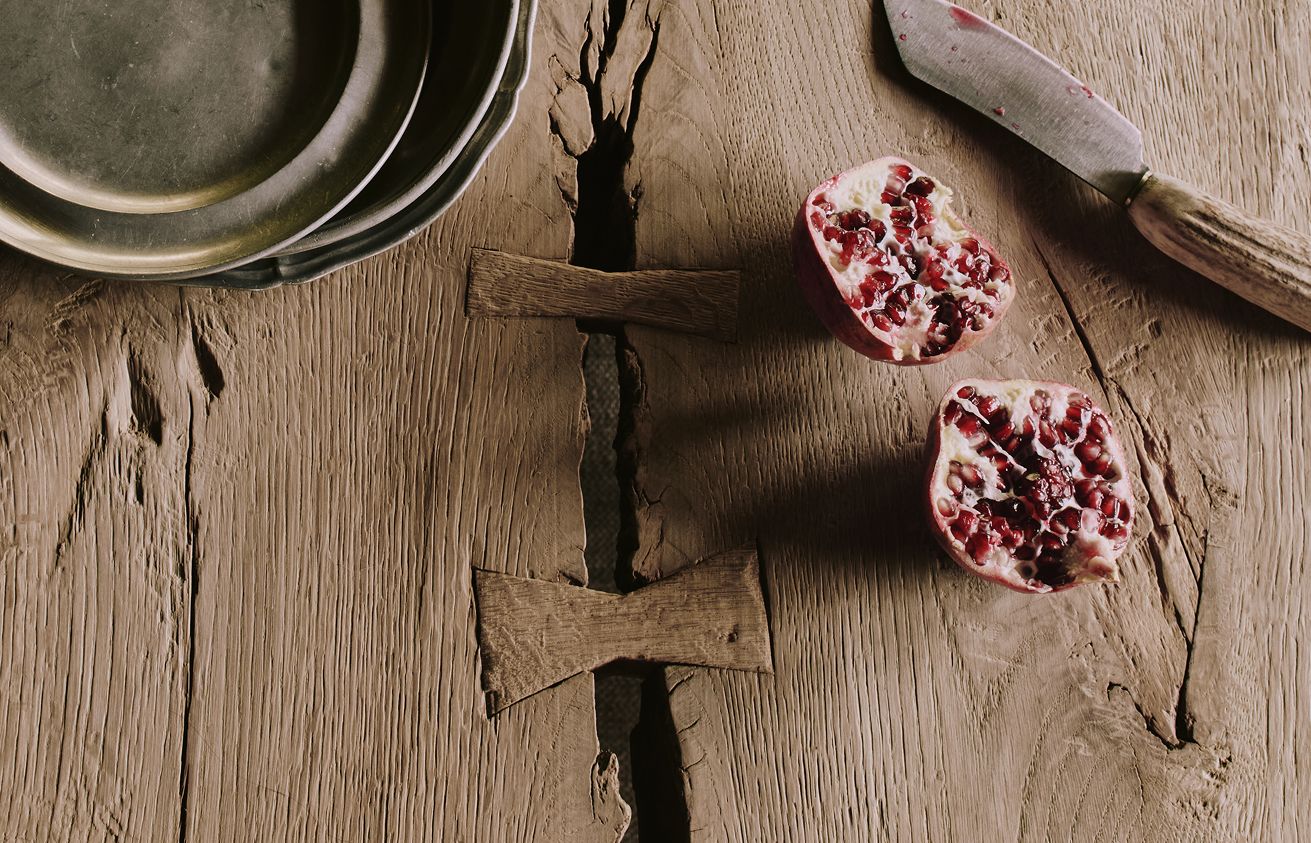
The concept of the design was to carry tradition forward without directly referencing it. Historical influences were not to be copied but interpreted — for example through wall paneling inspired by traditional Swiss precedents or through untreated surfaces that are allowed to develop a patina over time and tell their own story across generations. As experienced carpenters and a strong partner in interior construction, we supported this design approach through the craftsmanship and development of unique furniture details.
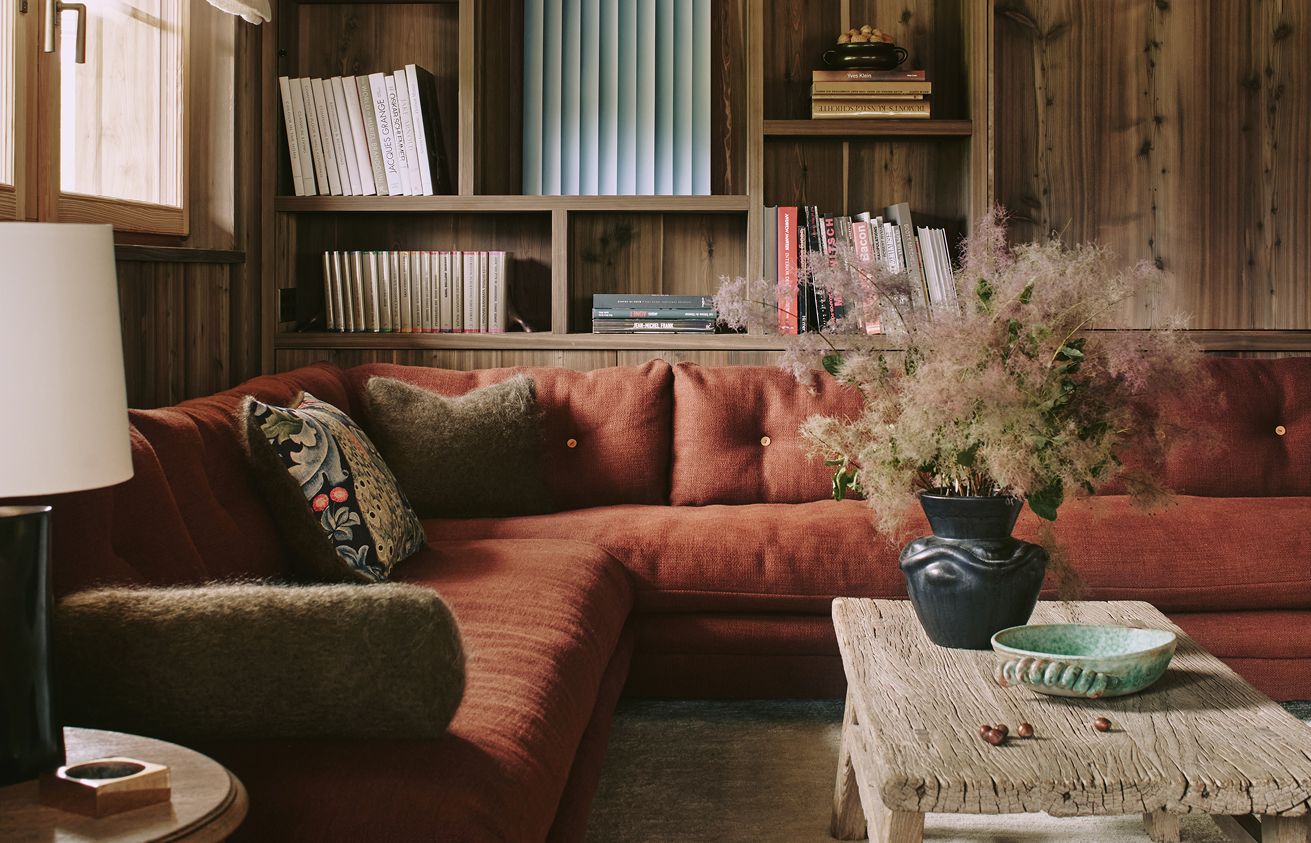
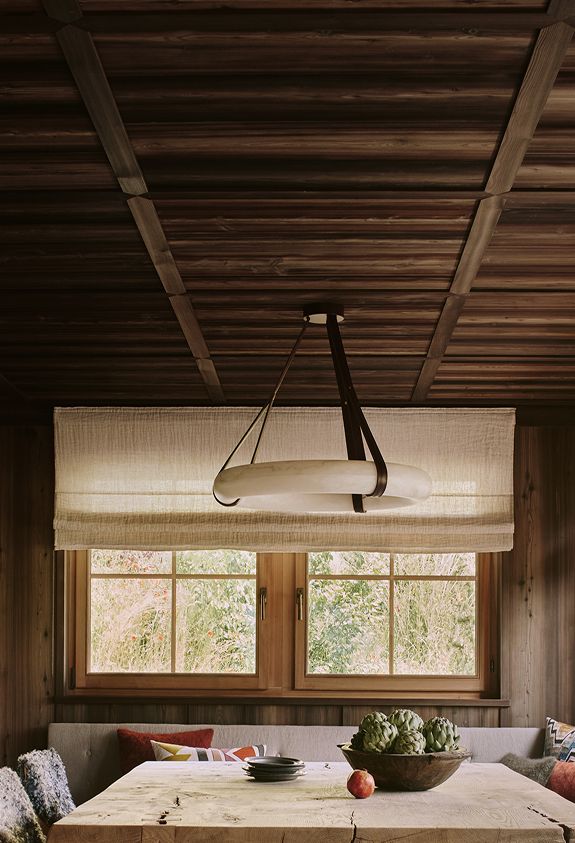
Material & Detail Concept
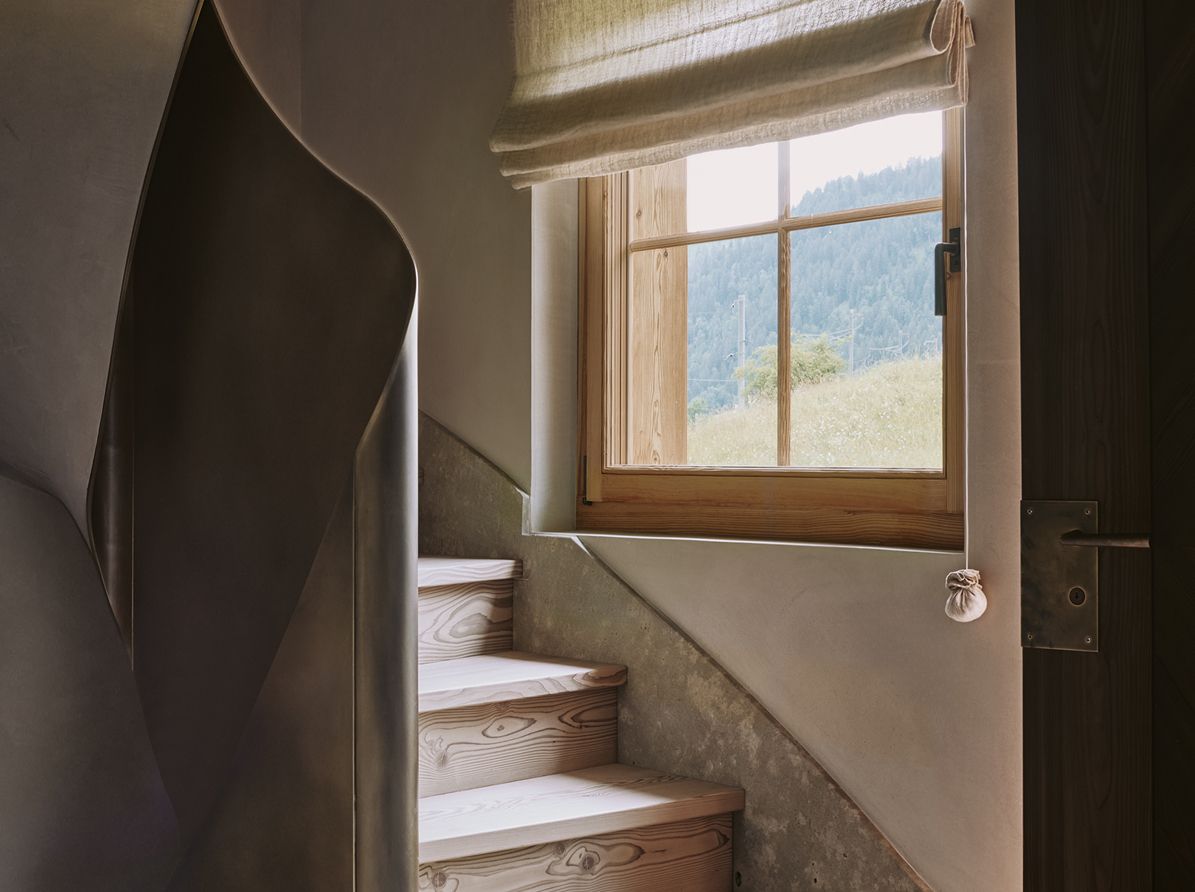
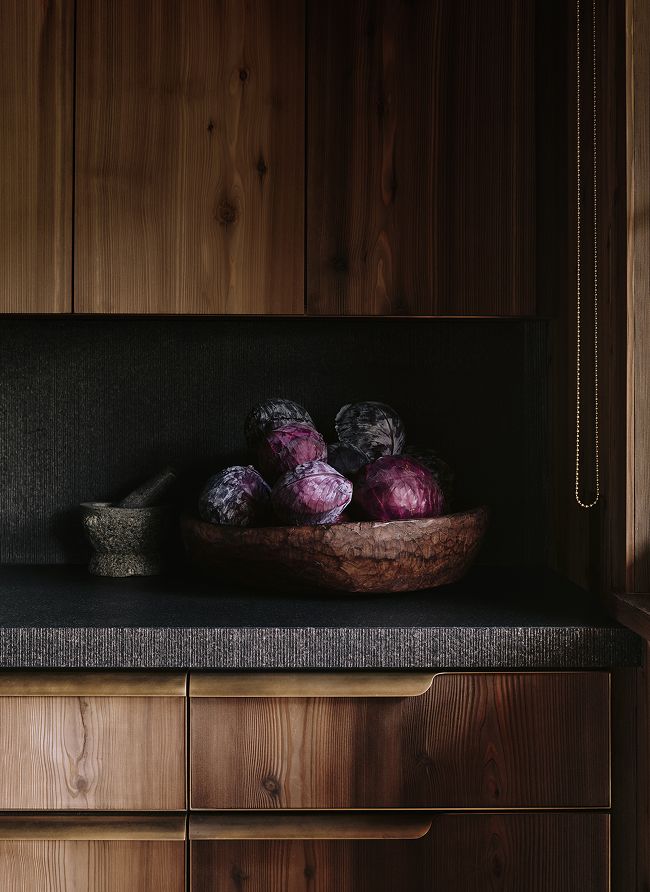
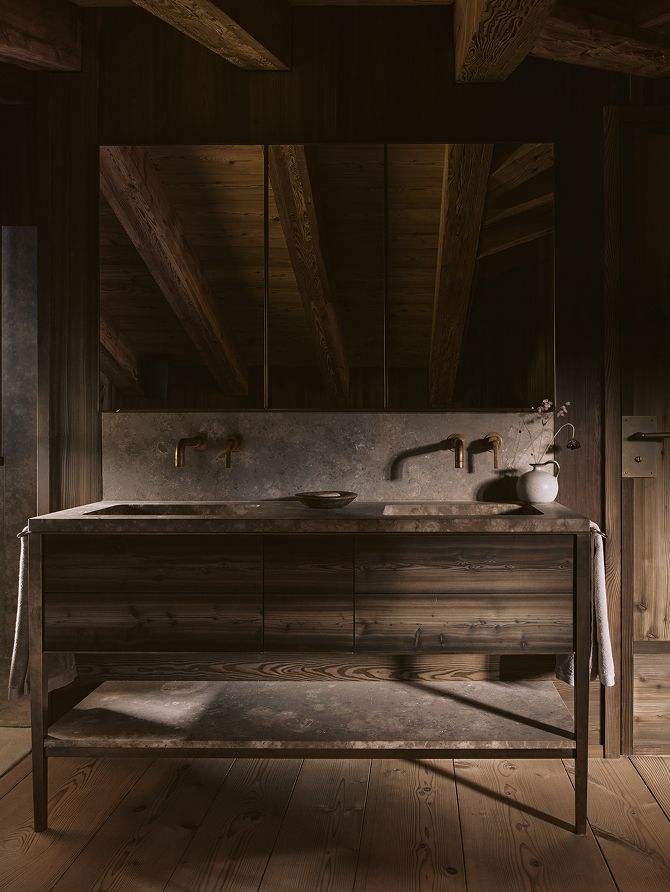
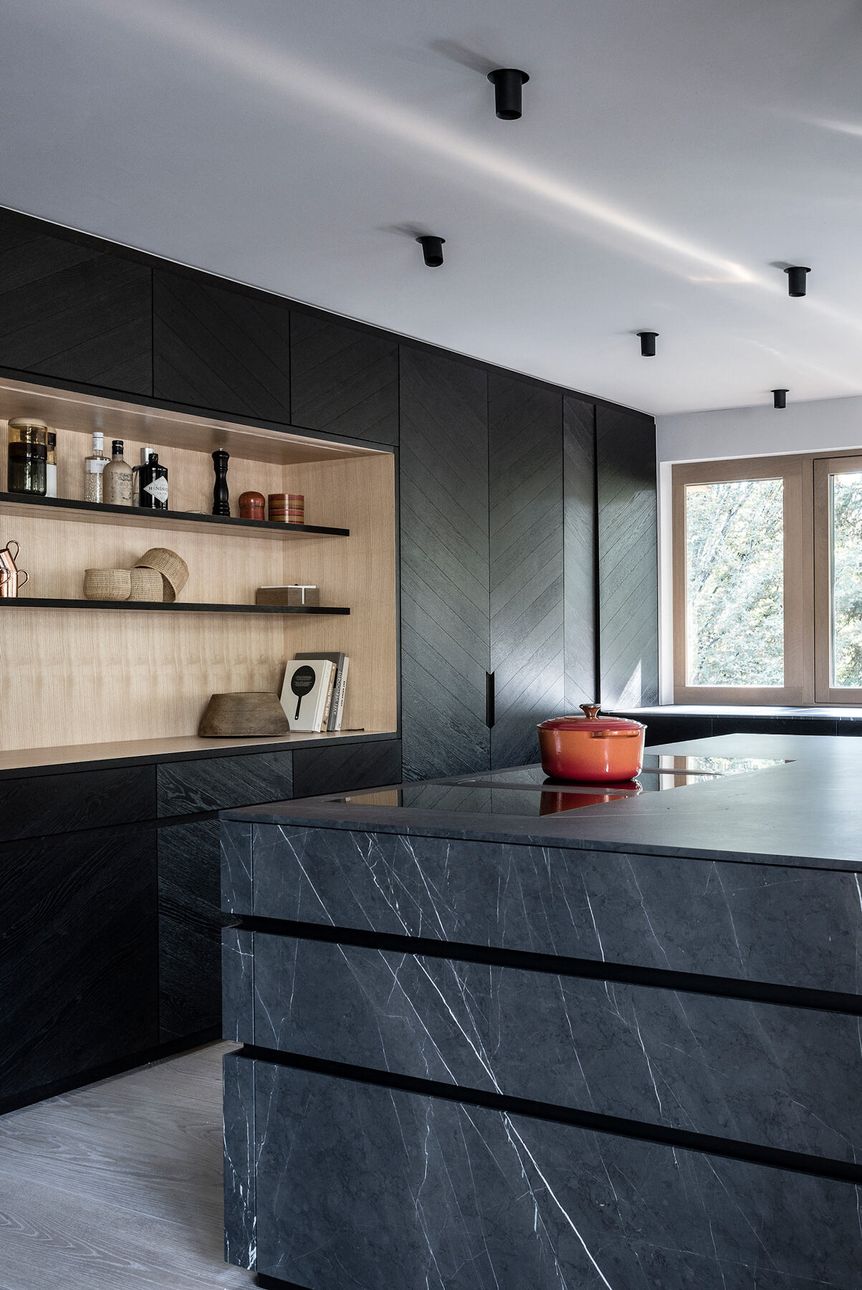
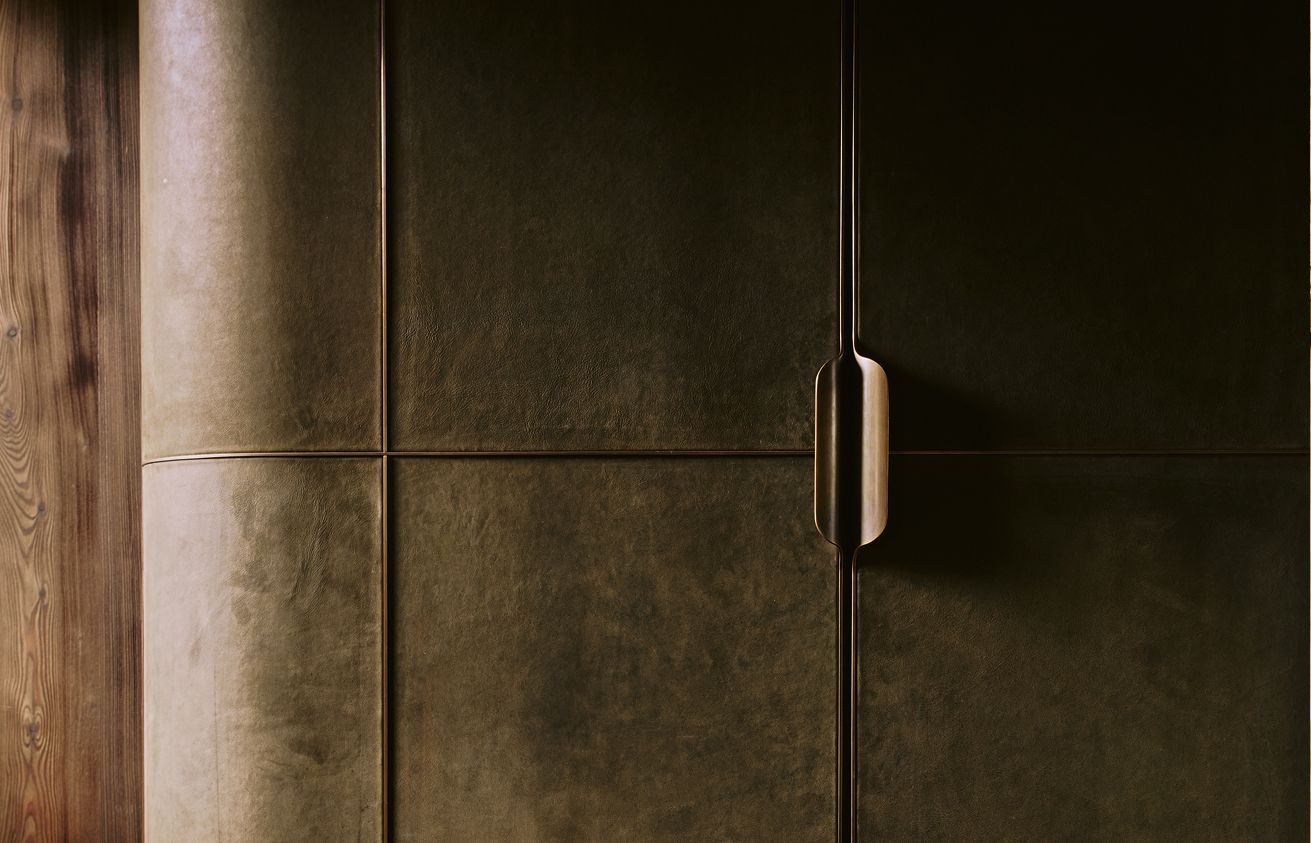
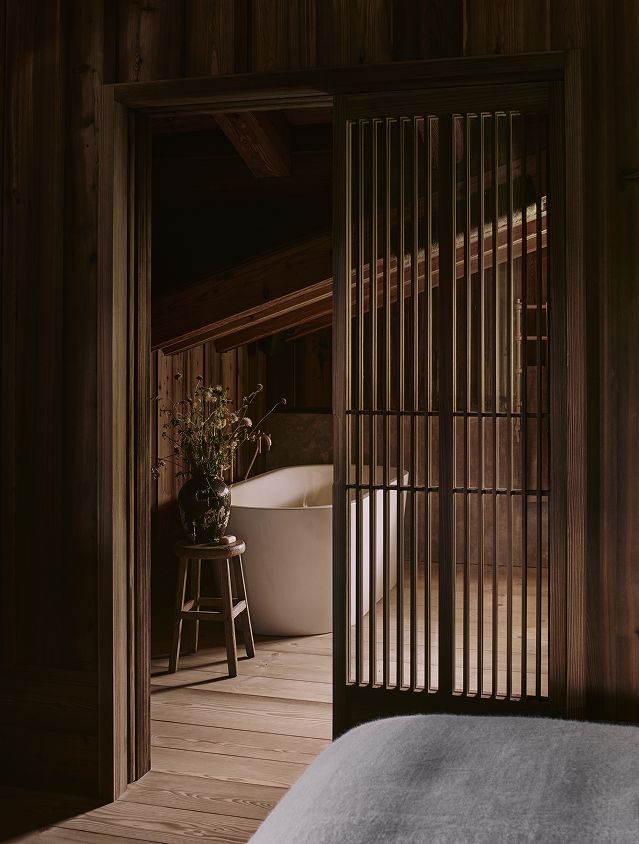
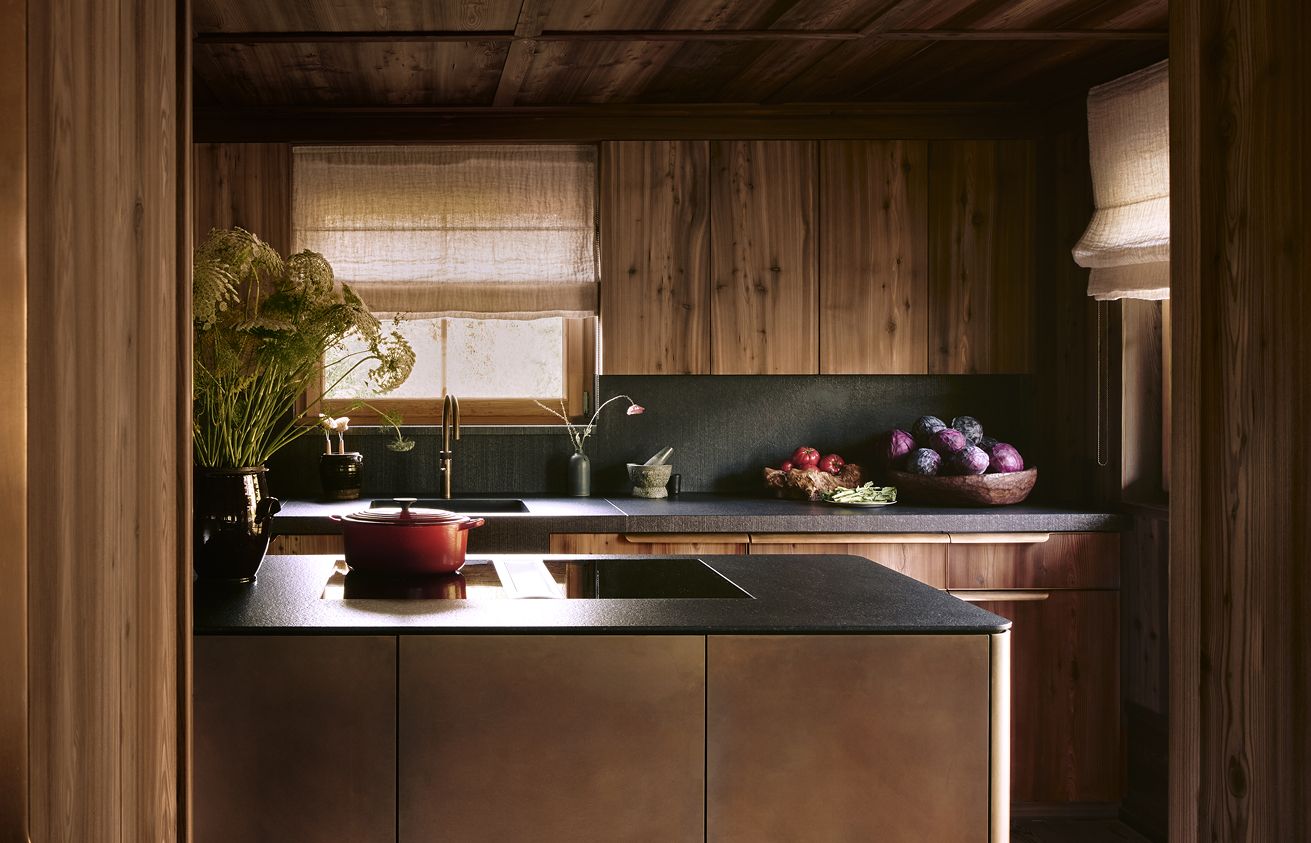
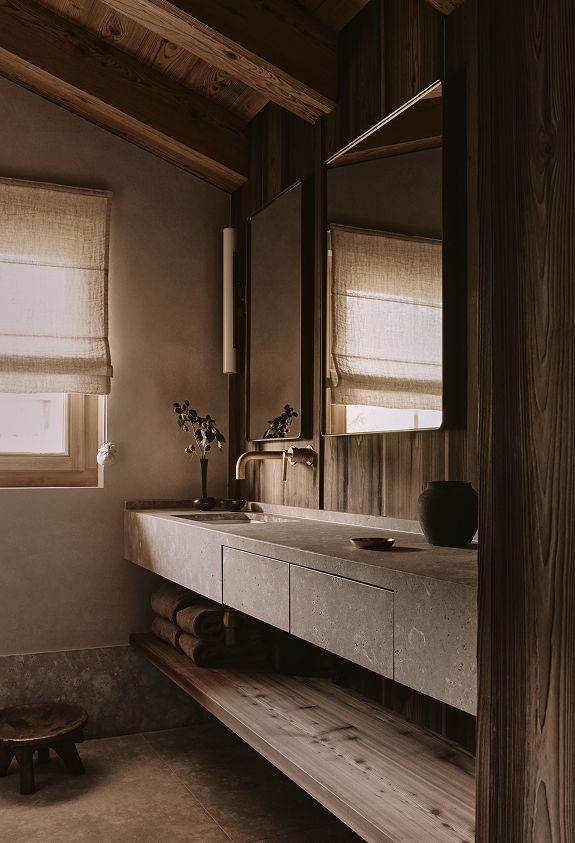
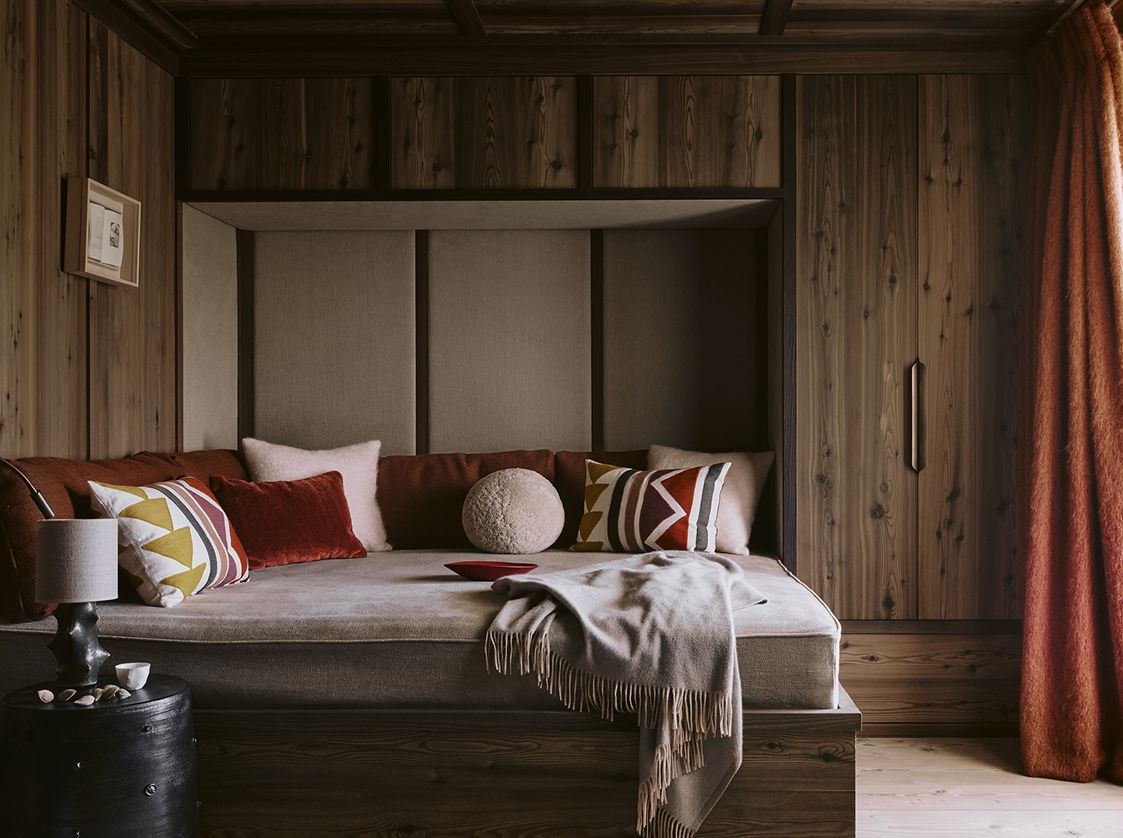
A restrained selection of materials was central to Hruby’s design concept — differentiated not by quantity, but by refinement in execution. We responded to this brief with carefully developed construction details and surfaces, drawing on the expertise and experience gained from previous projects. Throughout all three floors, the house is defined by three primary materials: solid, steamed and soap-treated fir for the flooring; limed and sandblasted larch for wall and ceiling cladding; and burnished brass for kitchen fronts and fine detailing.
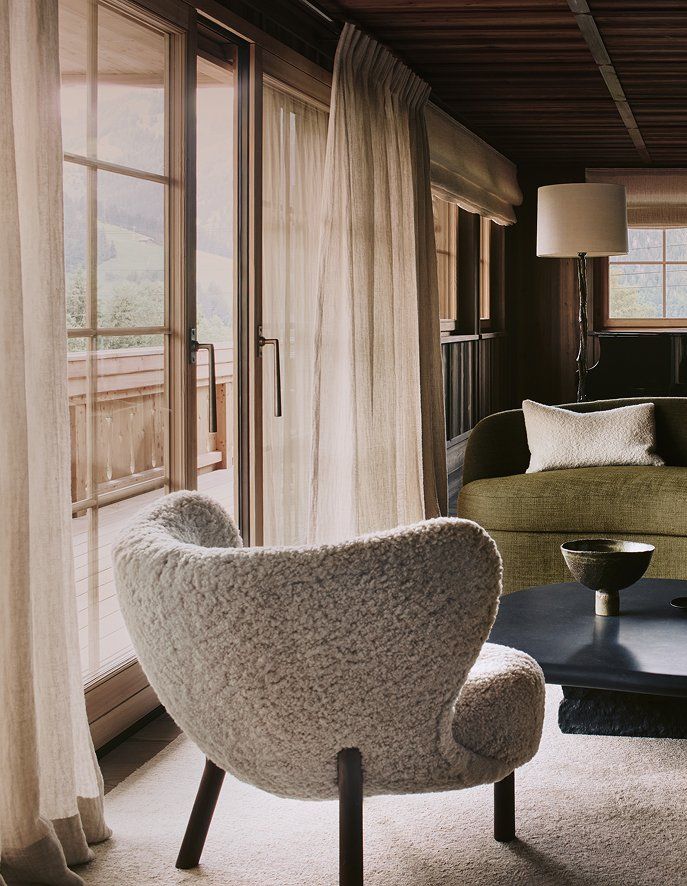
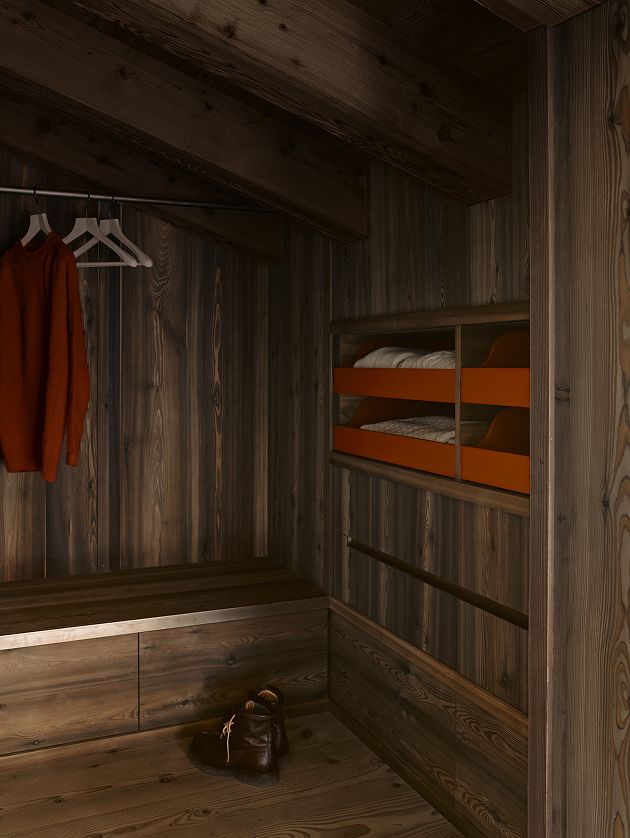
Depending on the light, the larch reveals warm honey tones or cooler, more subdued nuances. The finely brushed and oiled surfaces deliberately emphasize grain and texture. Solid, steamed and soap-treated fir defines the floors — darker in tone, calmer in appearance, with a subtly structured surface that creates depth and grounding. While fir and larch form a visual contrast, their differentiated surface treatments lend floors, ceilings, walls, and furniture an authentic presence, intentionally distancing the interior from the conventional alpine chalet aesthetic.
During the execution planning phase, corner solutions, shadow gaps, profiles, and support systems were deliberately further developed beyond standard conventions to meet the design ambition formulated by Hruby. Transitions between wall, ceiling, and furniture, as well as continuous wood surfaces and integrated details, were accordingly refined and executed with precision craftsmanship.
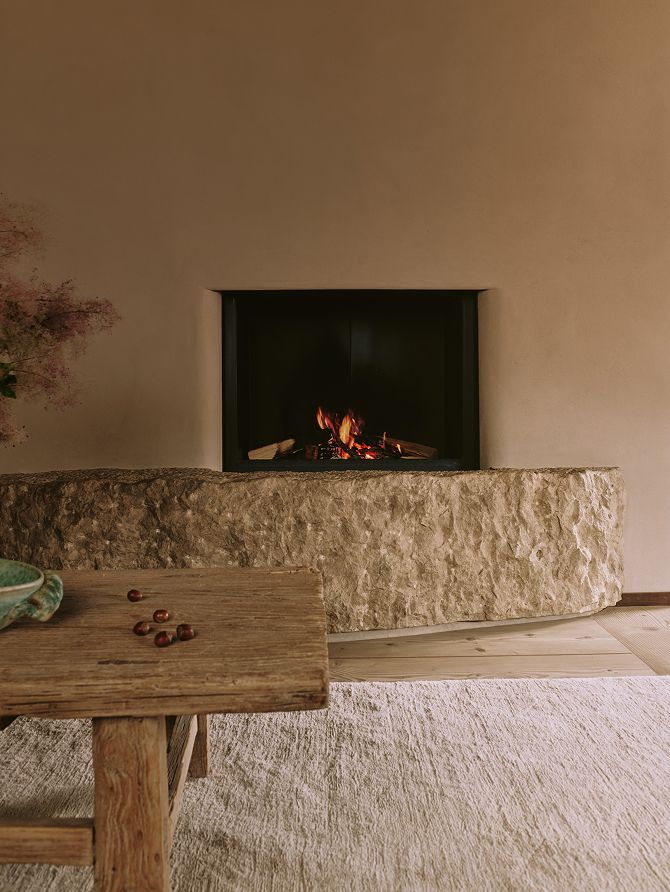
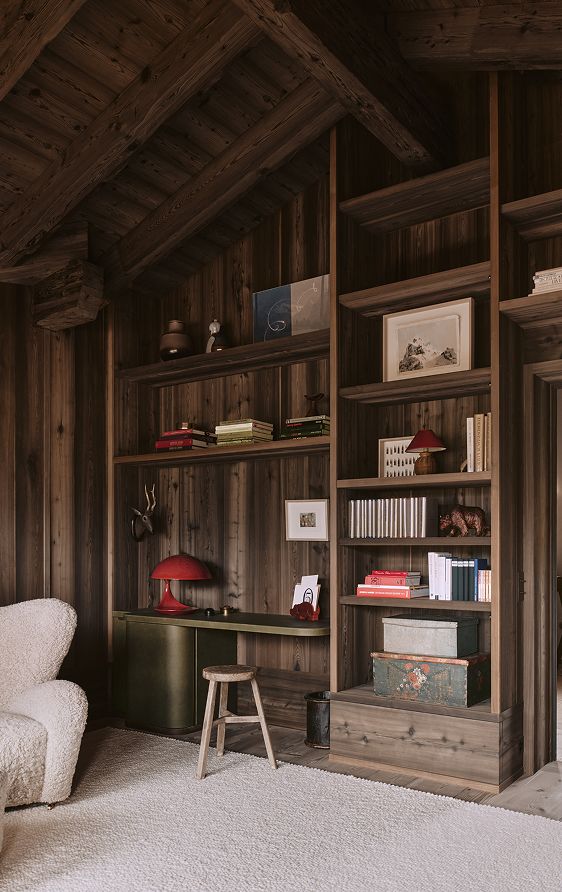
Craftsmanship & Process
The interior construction follows the principle of processing the entrusted materials to the highest standards of craftsmanship and in line with the long-term needs of its residents. Historical references from the Alpine region formed a deliberately chosen starting point in Hruby’s design, translating the atmosphere of traditional spaces into a contemporary expression. Thanks to Hruby’s strong spatial and design sensibility, combined with our precision in execution and manufacturing expertise in interior construction, the design was able to unfold its full impact.
“Not perfect” was consciously understood as a mark of quality: craftsmanship was meant to remain visible — as an expression of attitude, experience, and deep material understanding.
Design Concept & Planning: Hruby Studio
Interior Construction: EHAM GmbH
Photography: Michael Sinclair